This month there are three improvements in Blackboard Learn Ultra that the Learning and Teaching Enhancement Unit would like to highlight for Instructors.
Additional image insertion options
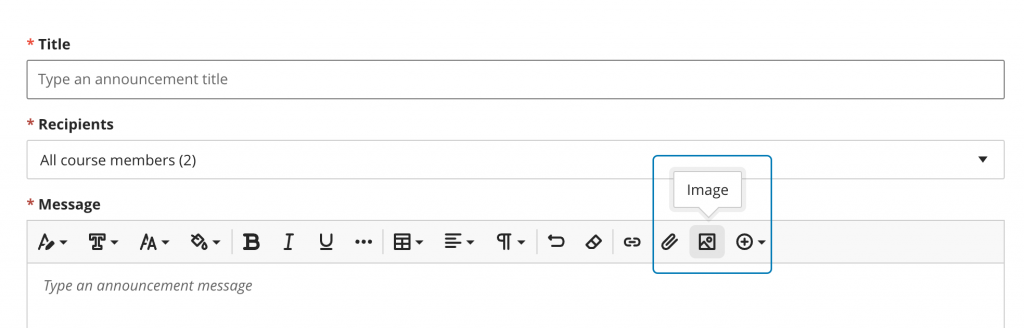
Images enhance comprehension of and engagement with course content. Instructors and students want to use high-quality images in content and submissions. To help with this, a new image button has been added in the content editor in the following places:
Announcements
Assessment Questions
Student answers on questions (local file upload only)
Submission feedback (standard view)
Journal entries and comments
Image below: Instructor view – image button on content editor for Announcements.
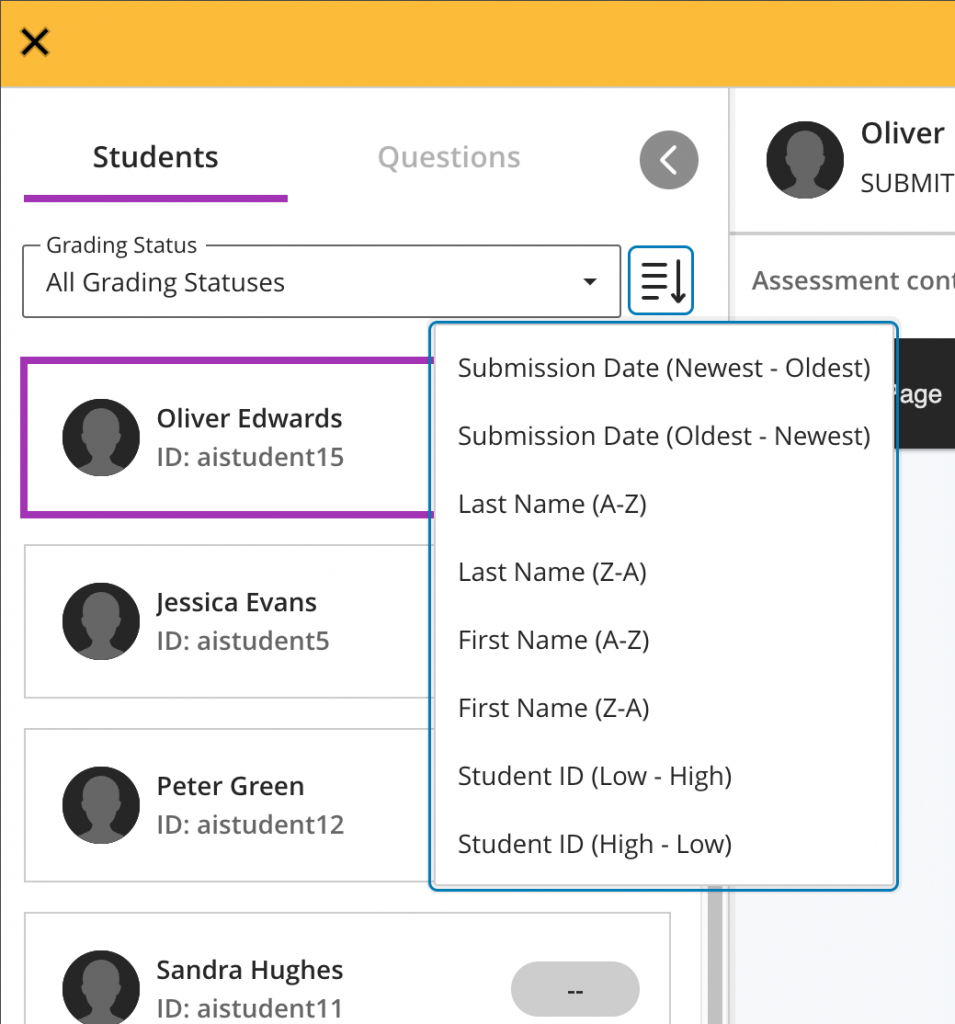
Flexible grading – sorting control on students tab
Grading large numbers of submissions without a way to organize them can be tedious. Now, instructors can apply various sorting options in flexible grading:
Submission date (oldest – newest) of latest attempt
Submission date (newest – oldest) of latest attempt
Last Name (A – Z)
Last Name (Z – A)
First Name (A – Z)
First Name (Z-A)
Student ID (ascending)
Student ID (descending)
The grading interface stores the most recently used sorting option. If an instructor stops grading an assessment and resumes grading later, the last sorting option is applied.
Also, if sorting the submissions by last name or grading status, the chosen sorting option carries over into the grading interface.
Image below: Sorting options as shown from Students tab in flexible grading.
Group assessment due date exceptions
Instructors may want to set different due dates for each group working on a group assessment.
In the past, there was no way to assign varying due dates for each group working on a group assessment. Now, instructors can assign a unique due date to each group using the exceptions workflow.
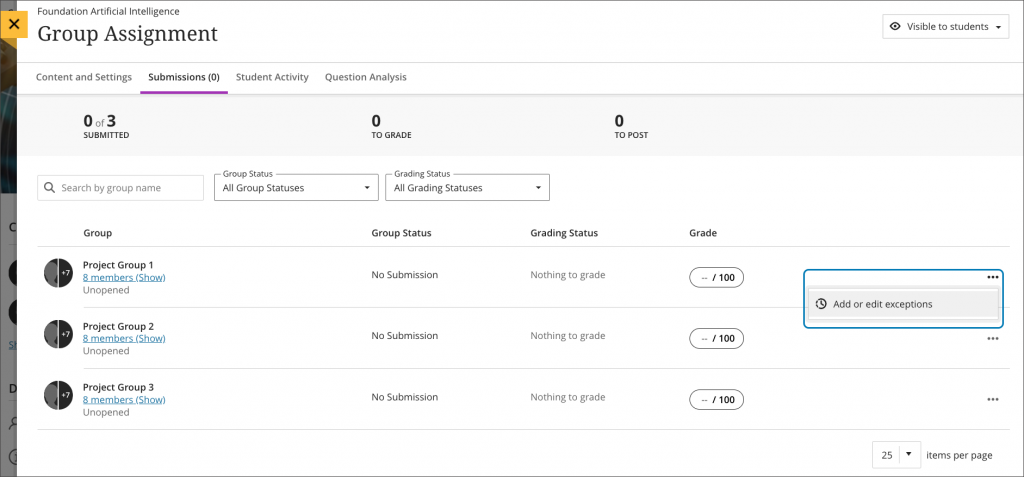
On the group assessment Submissions page, the instructor may add or edit exceptions for a group.
Image below: Instructor view – add or edit exceptions option on the group assessment Submissions page.
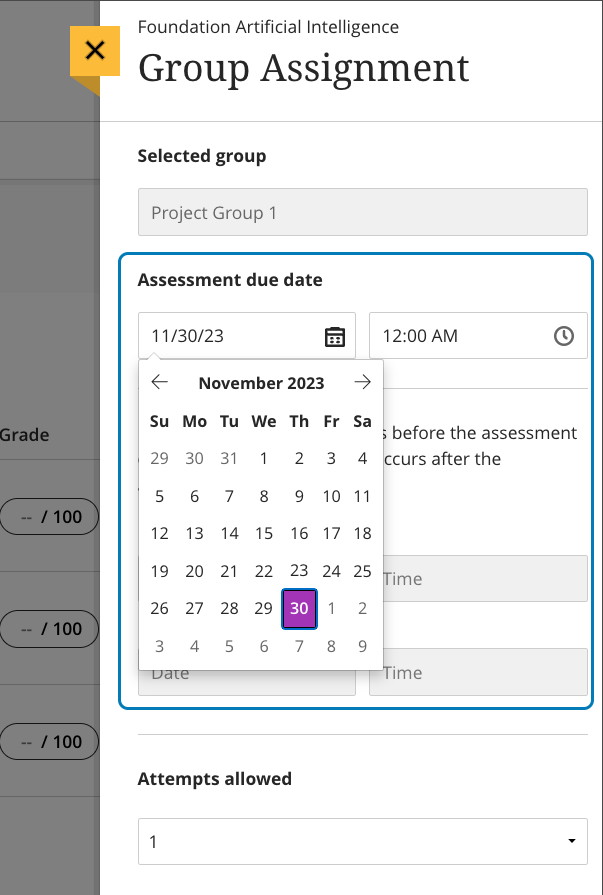
The Exceptions panel displays relevant information such as the assignment name and selected group name. This helps ensure the accuracy of an exception. Instructors can select a due date for the group using the date and time picker.
Image below: Instructor view – exceptions panel.
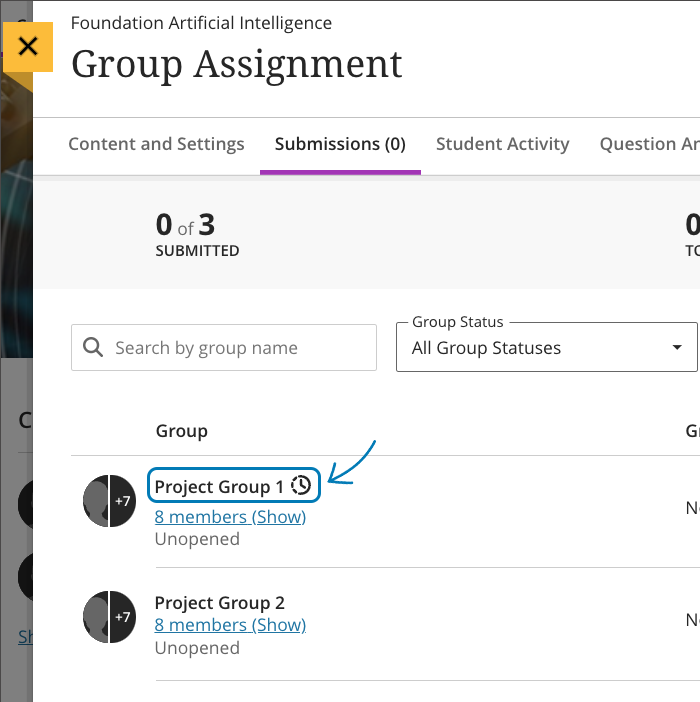
Image below: Instructor view – group assessment Submissions page displays the exceptions indicator for Project Group 1.
The Learning and Teaching Enhancement Unit would like to highlight five enhancements for Instructors from the November Blackboard Learn Ultra Update. These enhancements are in three areas:
Making your content more visual using Images.
Updates to Tests.
Managing your Gradebook.
Making your content more visual using images:
1. Image insertion option for Ultra Documents, Journals, Discussions, Assessment attempts, and Courses
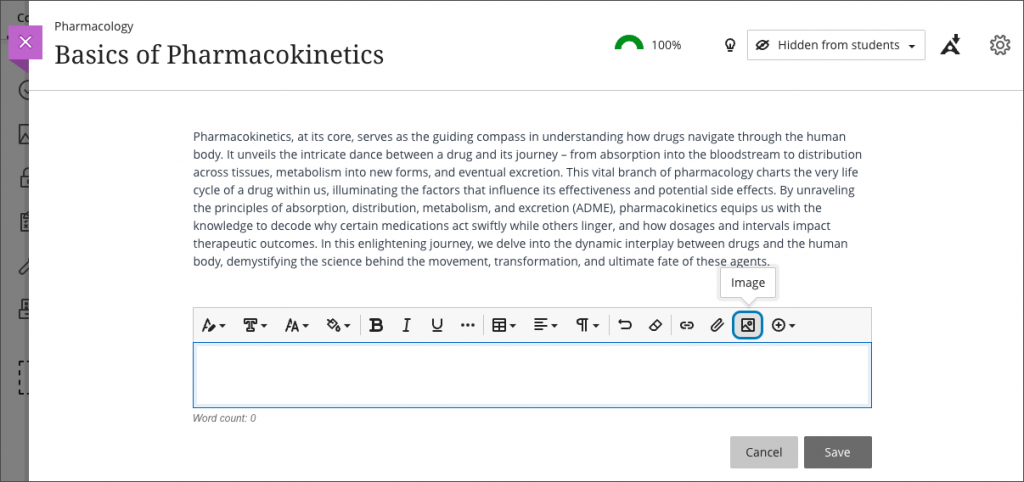
Images play an important role in a student’s education experience. Images help to enhance comprehension of and engagement with course content. To help instructors more easily identify high-quality images, Blackboard have added a new image button in the content editor in the following places:
Ultra Documents
Journal prompts
Discussions
Course Messages
Image below: Instructor view – New image button on content editor for Ultra Documents.
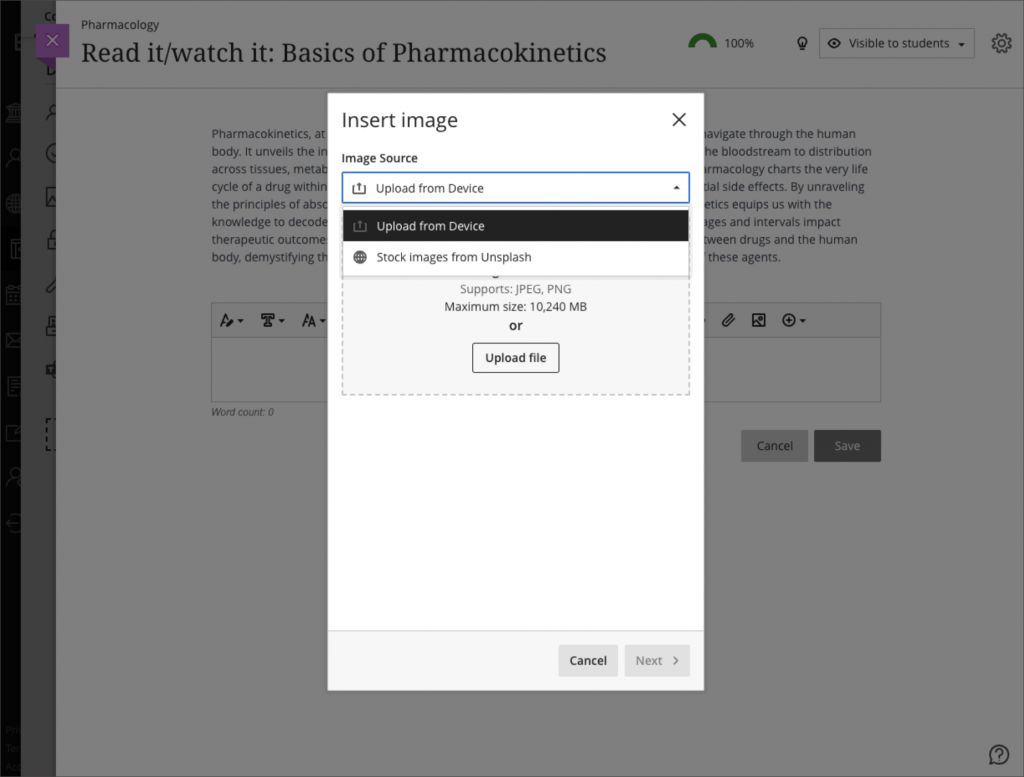
When selected, the instructor has the following options:
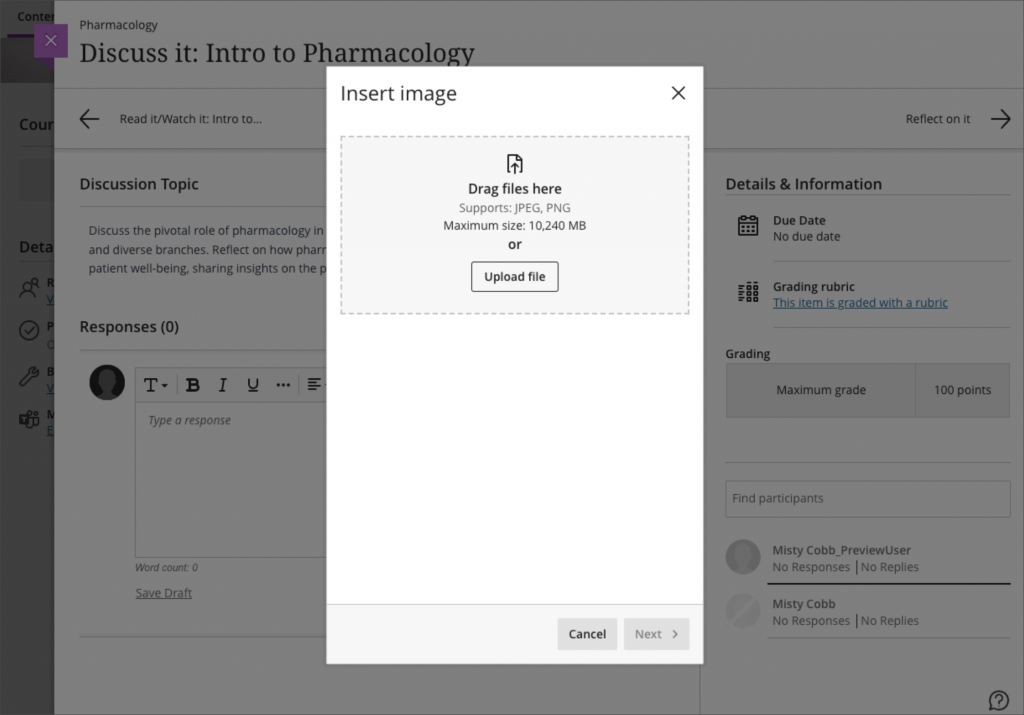
Upload an image through selection or drag and drop.
Select a royalty-free, high-quality image from Unsplash.
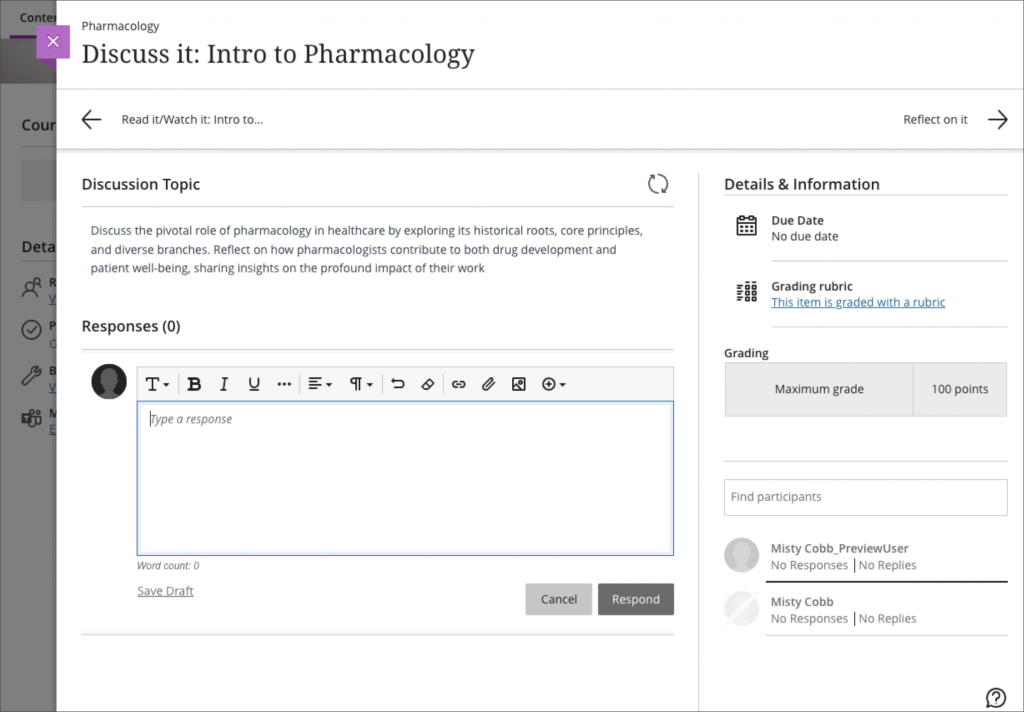
Students can also access the new image button on the content editor in the following areas:
Discussion responses.
Assessments and test question inputs.
Course Messages.
Image below: Student view – New image button on content editor for discussion response.
Image below: Student view – Drag and drop or upload an image file.
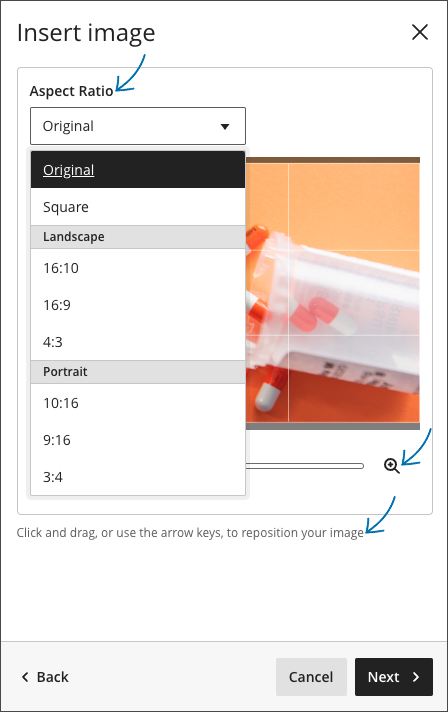
After selecting the image, instructors and students can reposition the focus and zoom of the image. There’s also an option to alter the aspect ratio of the image.
Image below: Modify the zoom and focus of the image; set the aspect ratio.
Users can rename the image. It is important always to consider the accessibility of course content. The user should mark the image as decorative or provide suitable alternative text.
Instructors can also set the view and download file options for the image. After the image is inserted, the instructor can resize the image.
Updates to Tests:
2. Edit/Regrade in Questions
Instructors may spot a mistake in a test question when grading a test submission. For example, instructors may have found a typo, chosen a wrong answer, or wanted to adjust points.
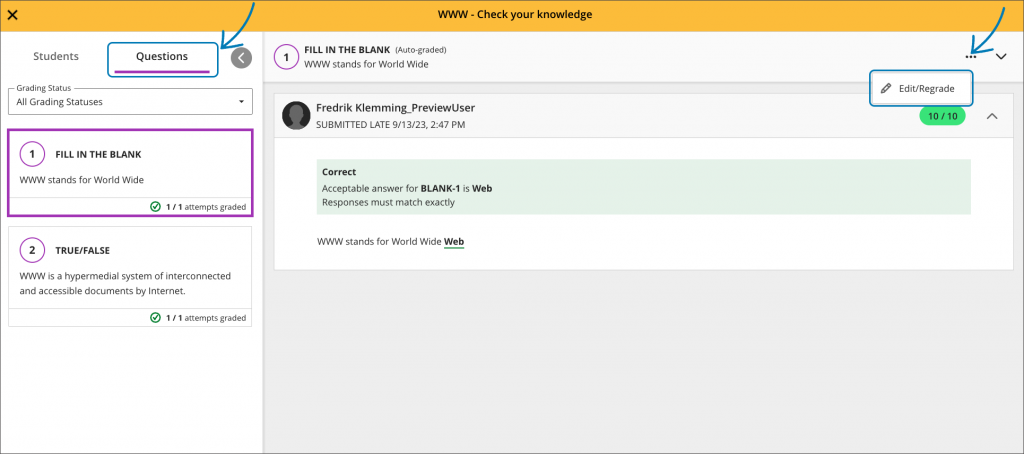
In the past, the “Edit/Regrade Questions” option was only available when grading submissions by “Student.” Now, instructors can also access the Edit/Regrade workflow when grading by question.
Image below: Instructor view – Edit/Regrade option when grading a test by question.
Image below: Instructor view – editing a question using the Edit/Regrade option.
3. Matching question updates: partial credit auto-distribution and other updates
Matching questions are useful for testing a student’s skill in making accurate connections between related concepts. This question type also checks students’ understanding in a structured format.
To reward students who show partial understanding, some instructors wish to award partial and/or negative credit for matching questions.
In the past, instructors selected a scoring option:
allow partial credit.
all or nothing.
subtract points for incorrect matches, but question score can’t be negative.
or allow negative question scores.
These options were exclusive and, at times, created confusion for instructors.
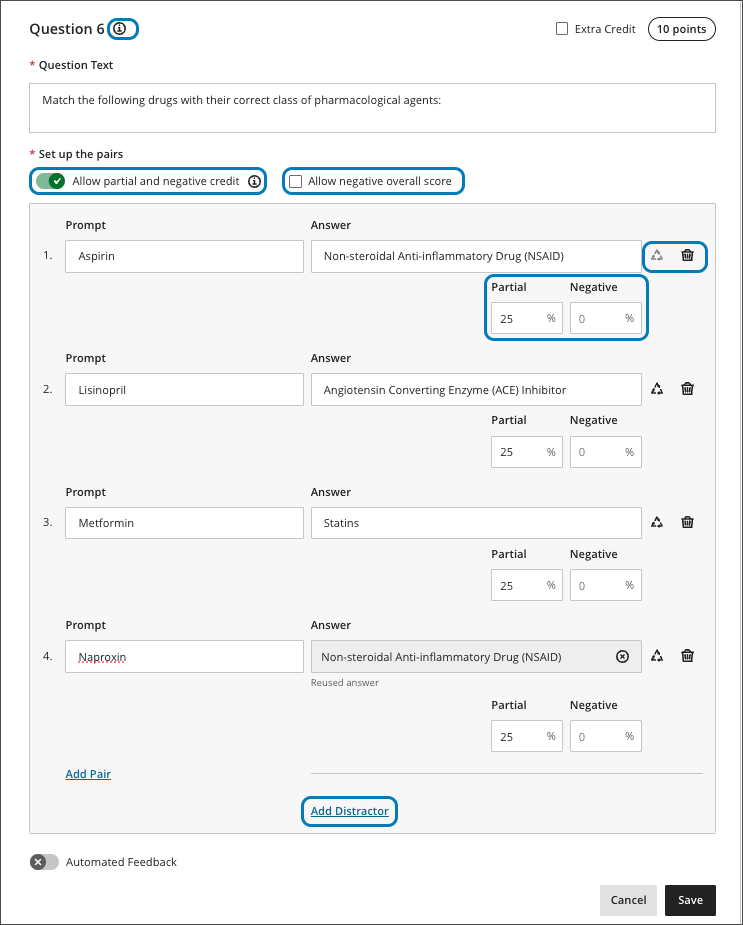
Now, partial and negative credit is turned on by default. Blackboard auto-distributes partial credit as a percentage across the matching pairs. The auto-distribution of credit saves instructors time. Instructors can edit the partial credit values if needed to grant some pairs more or less credit. Values for partial credit must sum to 100%.
If desired, instructors may also specify a negative credit percentage to any pair. Negative credit is only assessed when applied and when a student mismatches a pair. If desired, instructors may choose to allow an overall negative score for the question.
We also made a few other improvements to this question:
Blackboard re-worded the question construction guidance and moved it to an info bubble.
In the past, the “reuse an answer” and “delete pair” options were behind the three-dot menu. Now, these options appear on the right side of the answer for each pair.
Before reused answers appeared as “Reused answer from pair #” in the answer field. Now, the answer itself is displayed in the answer field. “Reused answer” appears beneath the answer for the pair.
“Additional answers” renamed to “Distractors.”
Image below: New Matching question layout.
Managing your Gradebook:
4. Gradebook grid view performance improvements
Some instructors prefer to work in the gradebook grid view. To improve the user experience, we made several improvements to this view. These improvements address overall performance and reduce the load time.
Performance tested scenarios:
25K student enrolments and 400 gradable items: Load time reduced from 108 s (about 2 minutes) to 14s (87% performance improvement)
2000 student enrolments and 400 gradable items: Load time reduced from 19s to 8s (57% performance improvement)
40 students and 400 gradable items: Load time reduced from 8s to 6.8s (14.75% performance improvement)
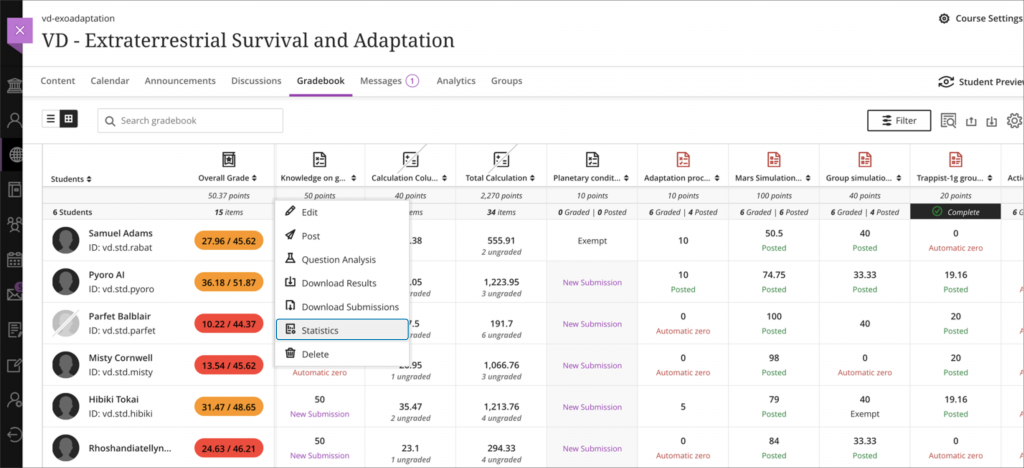
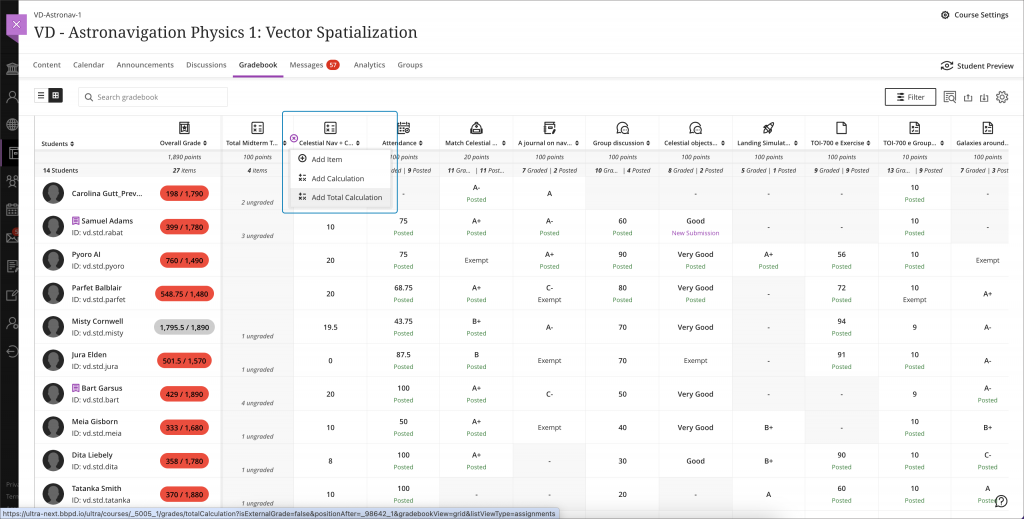
5. Sorting controls for Student Name, Overall Grade, Assessments, and Manual Columns in grid view.
To use the grid view click the toggle grid and list view button:
Sorting options in the gradebook provide a more efficient grading experience.
Now instructors can sort the following gradebook grid view columns:
Student Name
Overall Grade
Tests and Assignments
Manual columns
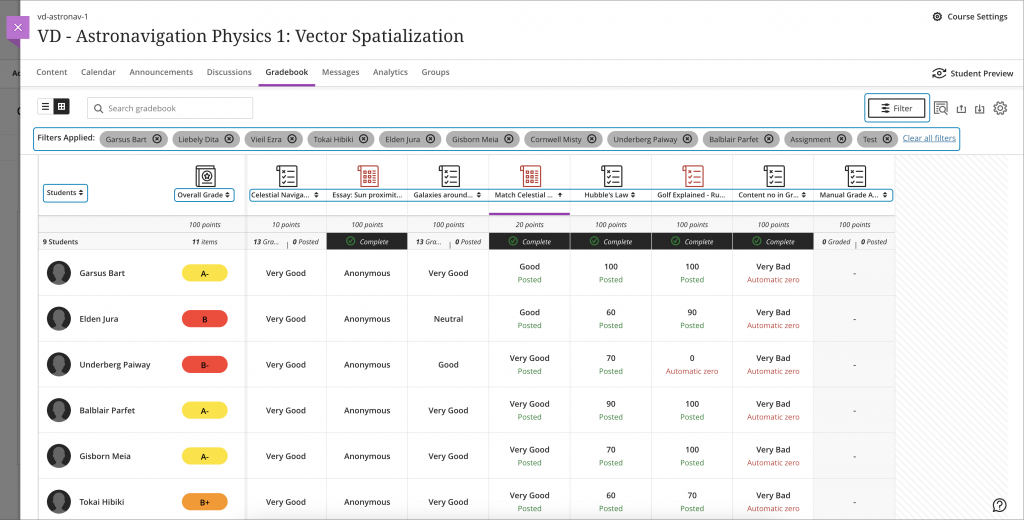
Instructors can sort records in ascending or descending and remove any applied sorting. A purple highlight in the column header helps instructors identify where sorting is applied.
Any sorting applied yields a temporary change to the sort order of all columns in the gradebook grid view.
Image below: Sorting an assessment in the grid view with filters applied.
The Learning and Teaching Enhancement Unit would like to highlight four enhancements to Instructors from the October Blackboard Learn Ultra.
1. Partial credit auto-distribution for correct answers for Multiple Choice questions
Multiple-choice questions with more than one correct answer are valuable assessment tools. Also known as multiple-answer or multiple-select questions, these questions assess comprehensive understanding. They also promote deeper learning and higher-order thinking skills.
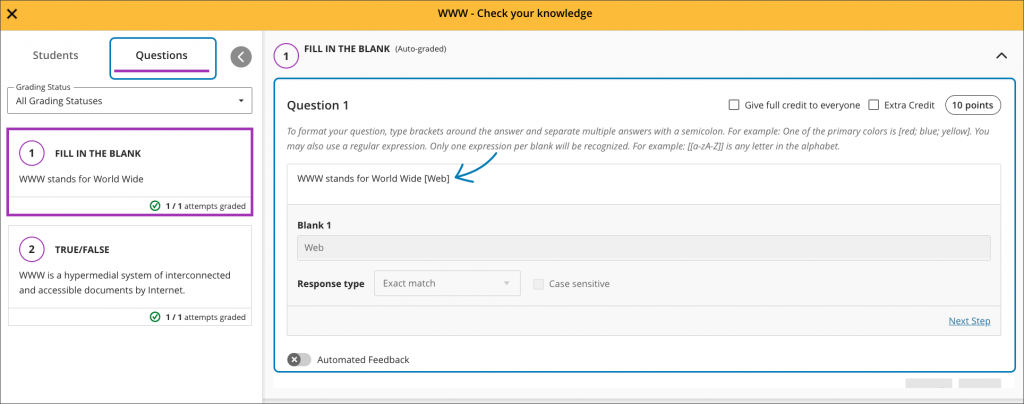
Some instructors wish to award partial credit for these question types. This practice awards students who have a partial understanding. It also fosters a positive learning experience.
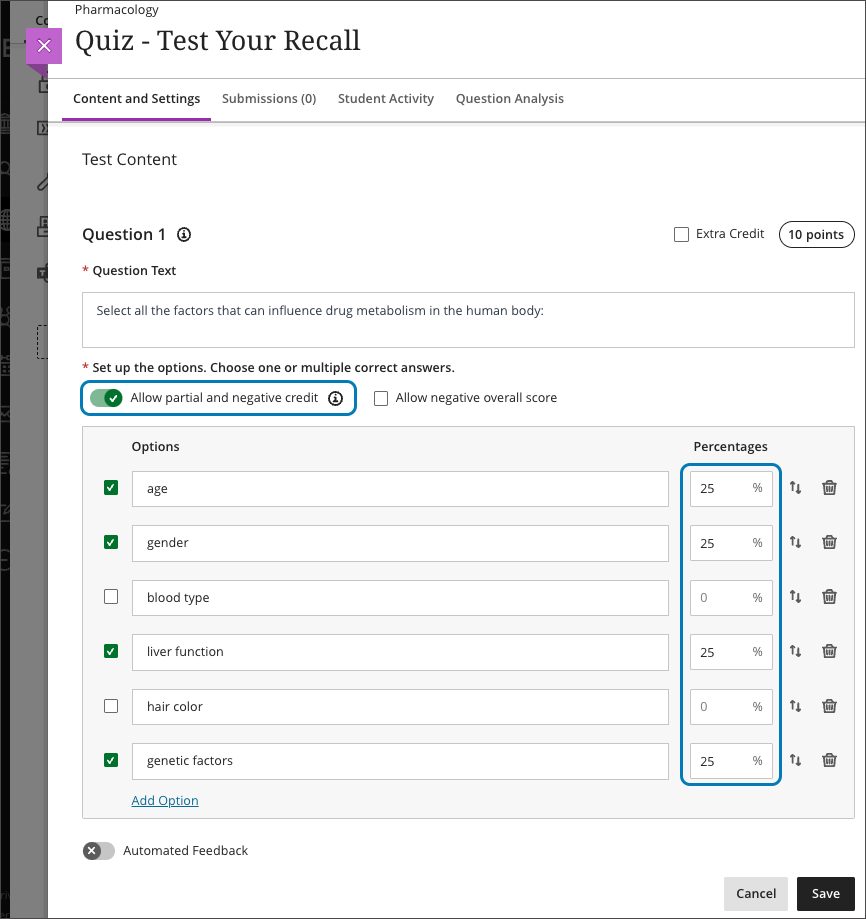
In the past, instructors had to enter a value for partial credit percentage for each option. Now, Blackboard will auto-distribute partial credit across correct answer choices. This distribution provides efficiency and saves instructors’ time. If desired, instructors can edit the values if some correct answer options warrant more or less credit. Values for correct answers must sum to 100%.
Image below: Question credit auto-distributes across correct answer options; values can be edited.
2. Send reminder from gradebook list and grid views
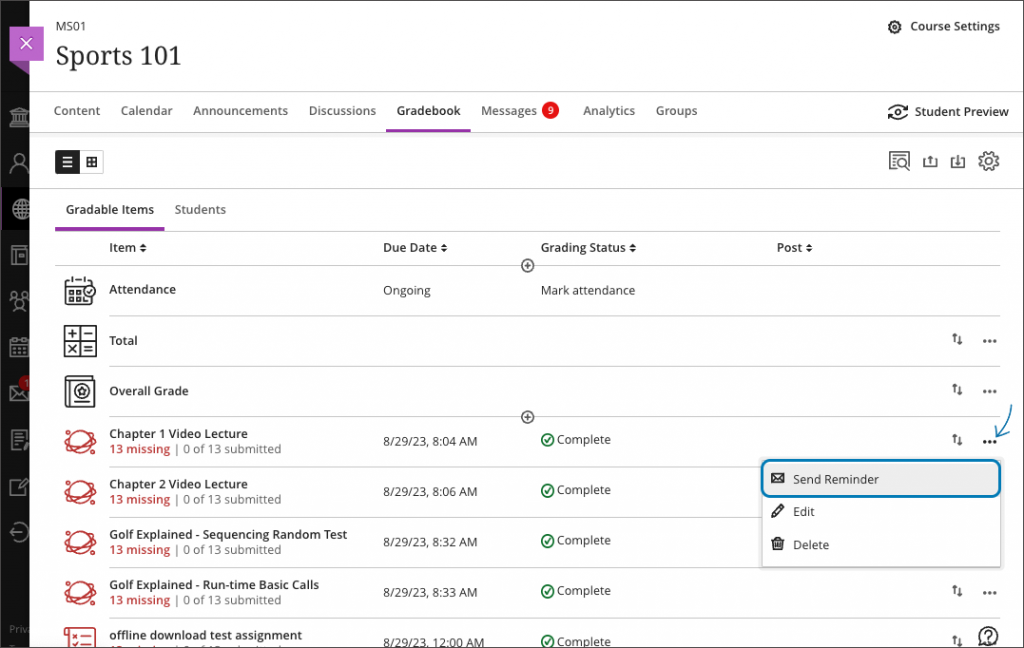
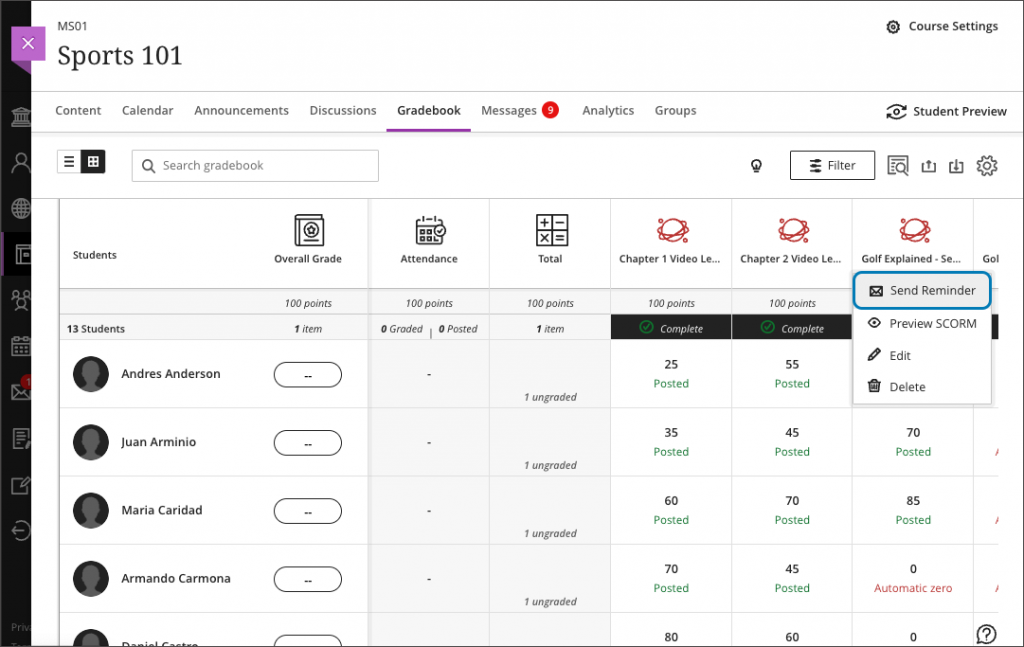
Instructors may want to send a reminder to students or groups who haven’t yet made a submission for an assessment. To make this easy, Blackboard have added a “Send Reminder” option to items in the Gradebook.
There are two views of the Gradebook that can be toggled between using the button. List view and grid view.
Image below: Use the list view and grid view button to toggle between views.
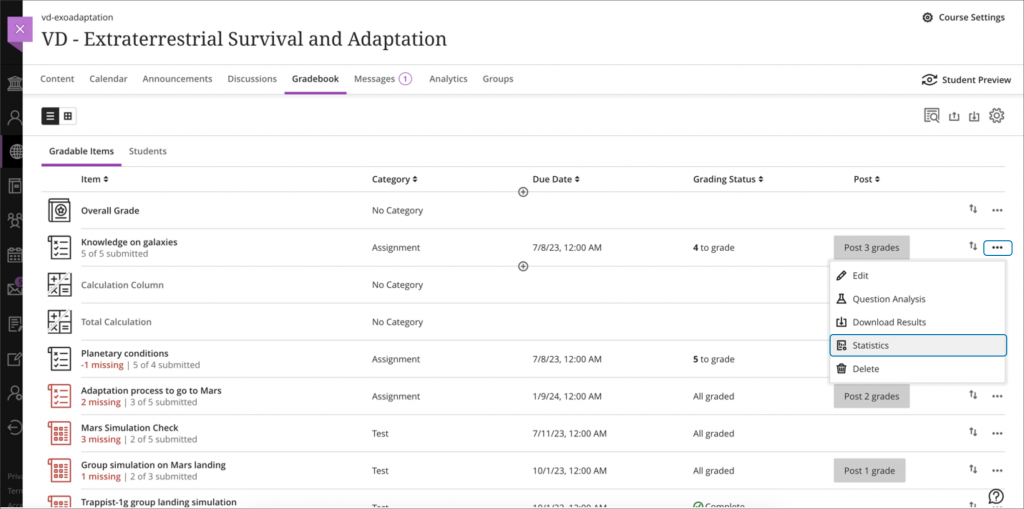
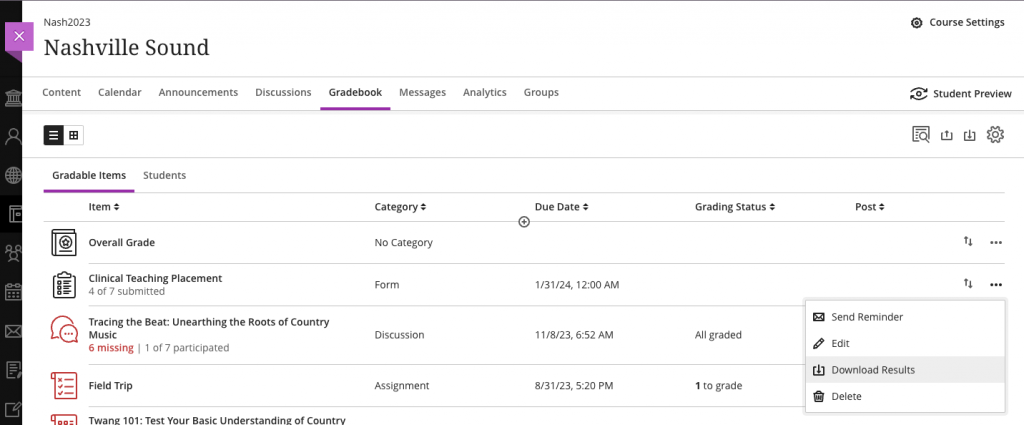
From the Gradebook list view, the option to send a reminder is in the overflow menu (three dots).
Image below: Send Reminder option from list view
Instructors may access the “Send Reminder” option in the grid view by selecting the gradebook column header.
Image below: Send Reminder option from grid view
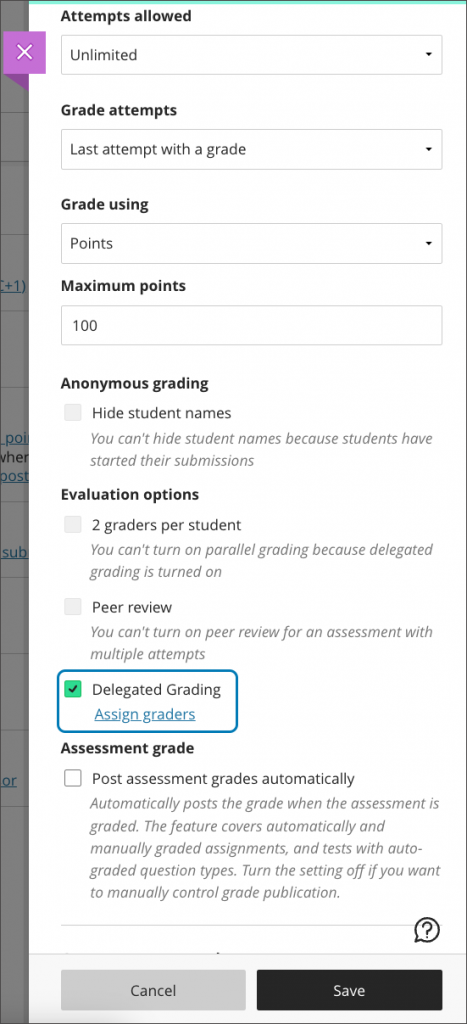
3. Delegated grading distribution by group membership
Instructors sometimes distribute the grading workload for an assessment to multiple graders. This is a popular practice in larger classes. Instructors can assign graders to groups of students with the new delegated grading option. Each grader will only see the submissions made by students in the group(s) assigned to them.
Delegated Grading can be used with all available group types. This first release of Delegated Grading supports assignment submissions from individual students. Tests, group assessments, and anonymous submissions are not supported at this time. These will be released at a later date.
After selecting the Delegated Grading option, select the appropriate Group Set. Instructors can assign one or more graders to each group in the group set. If multiple graders are assigned to the same group, they will share the grading responsibility for the group members.
Graders assigned to a group of students will only see submissions for those students on the assignment’s submission page. They can only post grades for their assigned group members. Any unassigned instructors enrolled in the course will see all student submissions on the assignment’s submission page. They also post grades for all students.
Note: At least one Group Set complete with Groups must be present in the course before using the Delegated Grading option.
Image below: Instructor view of the assessment Settings panel with the Delegated Grading option enabled.
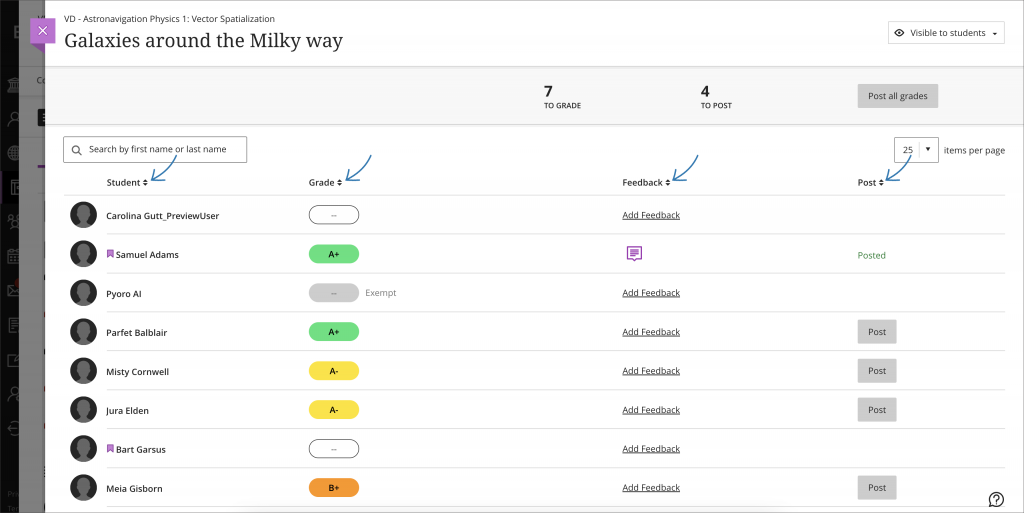
4. Sorting for manually added gradable items.
Sorting controls help instructors organize and find information in the gradebook. Instructors can now use sorting controls on the grades page for manually created items. The sorting controls enable sorting in both ascending and descending order. Instructors can sort the following information:
Student name
Grade
Feedback
Post status
The applied sorting order is temporary and resets when you leave the page.
Note: Sorting controls can be applied to one column at a time. When you sort another column, items will order according to the selected column.
Image below: Instructor view of sorting controls on the grades page for a manually added gradable item
This month saw the release of several further enhancements in Blackboard Learn Ultra.
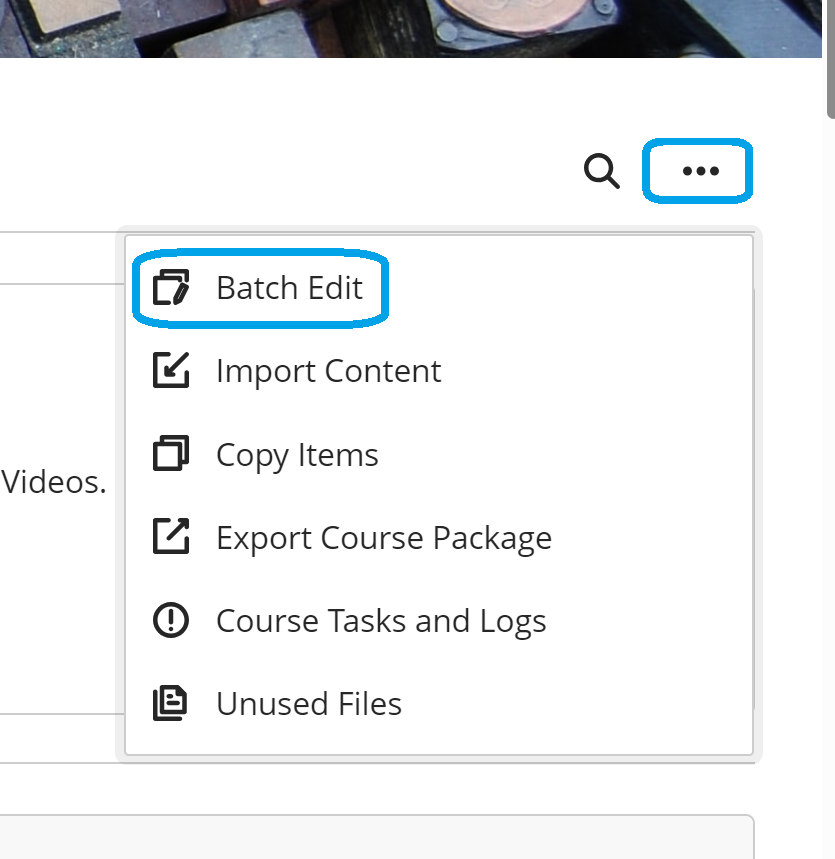
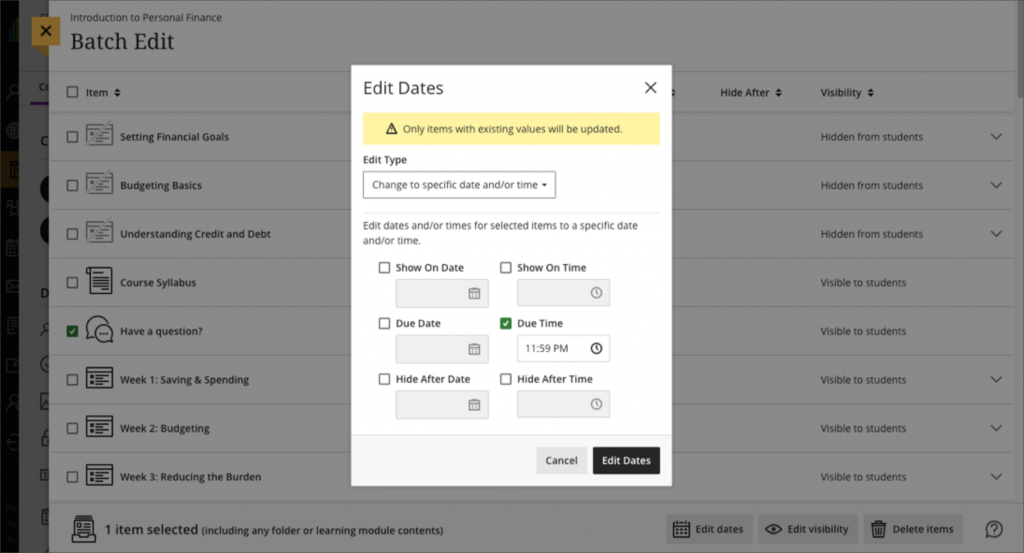
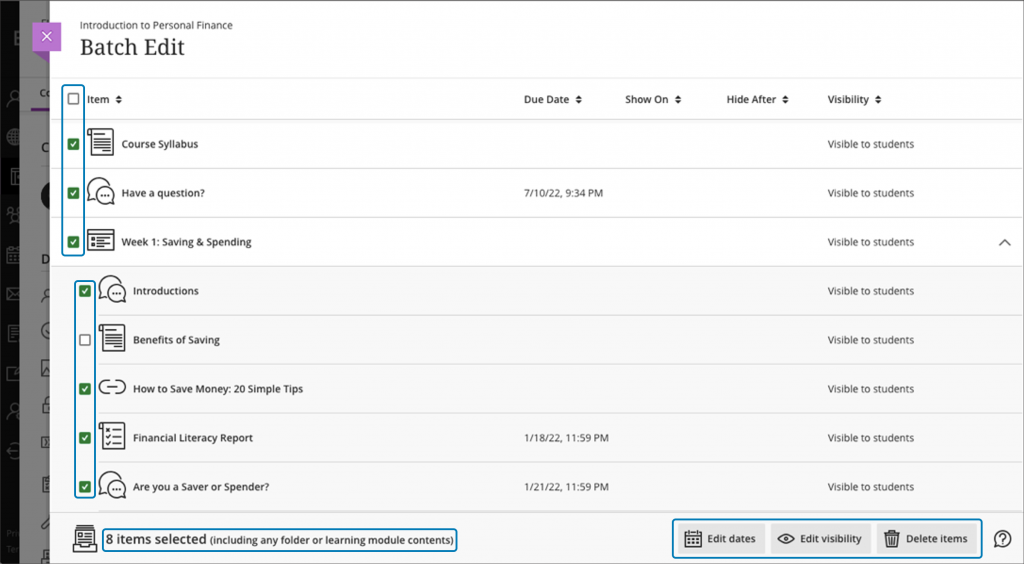
Batch Editor enhancements
Batch editing streamlines making changes to multiple items at once in Blackboard whether that is editing visibility, release conditions or deleting. Blackboard have updated batch edit so that actions now apply to all items inside of Folders and Learning Modules.
All items are now visible on a single page. Blackboard have added the ability to expand and collapse Folders and Learning Modules.
As we covered in a previous blogpost, Instructors can now search the extensive Unsplash stock image library for high-quality, royalty-free stock images to use within Blackboard.
This month also saw us enable the Blackboard Ally accessibility tool that allows students to download alternative formats of content as well as accessibility checker for Instructors.
If you’re a busy bee preparing your courses before the students arrive and don’t have any time to attend training sessions, how about visiting our new bite sized training video clips on how to work in Blackboard Ultra.
If you’re unsure about how to do something specific in Ultra or just need a quick refresher then take a look at our bilingual training videos. Here’s a breakdown of the individual video clips:
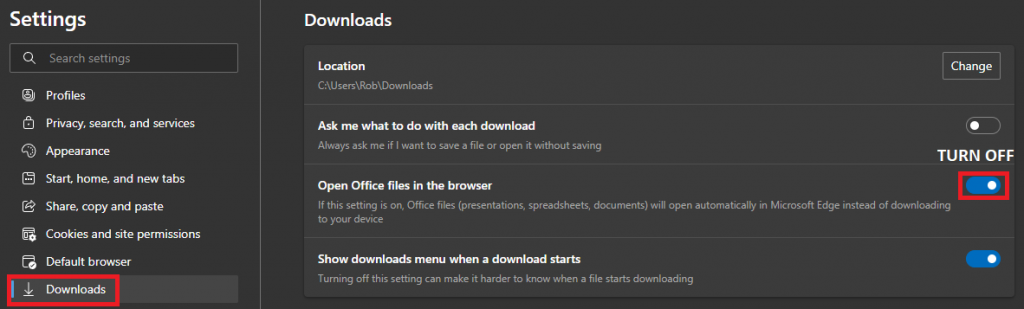
The Microsoft Edge browser attempts to open Microsoft Office files directly in the browser. When accessing files in Blackboard this is causing an error with the message; “404 – File or directory not found.”
A suggested workaround for this is to use either the Google Chrome or Firefox browsers.
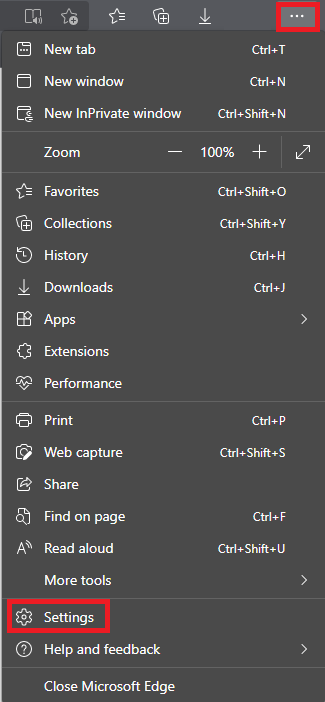
Alternatively you can change the following setting in Microsoft Edge:
Open the Edge menu by clicking the three dots and click Settings
Click Downloads
Turn off the setting Open Office files in the browser
Modules for the academic year 2021/2022 are now available for staff teaching on modules. This is in order to assist staff in preparing for the new academic year. You may have noticed that a new tab has appeared on the top menu of your Blackboard screen:
If you’re enrolled as a staff member on the module in Astra then you should be able to view your modules for next academic year. If you’re not able to see a module that you are enrolled on then contact your Departmental Administrator. Students won’t be enrolled on the module until registration is complete.
You’ll notice that the codes for modules have changed slightly owing to the new MAF form. AB1 denotes modules running in semester 1, AB2 denotes modules running in semester 2, and AB3 denotes modules running in Semester 3 and Semester S.
We’ve got the following support available to help with Course Copy:
Annually, the Learning and Teaching Enhancement Unit run the Exemplary Course Award, which recognises the very best practice in using Blackboard. This blog post details changes we have made to the process, when dedicated training sessions will be run, how and why to apply, and when the deadline for applications is.
To get an idea of what an ECA-winning module might look like, you can view last year’s winners’ module walk-throughs here (Lara Kipp, in English only, and Rhianedd Jewell, in Welsh and English).
Recognising the particular challenges of this academic year, we have put our heads together to streamline the process in the hopes that even more applicants submit their modules for consideration. The process is still rigorous and detailed, but we have made some key changes to encourage as wide a range of applications as possible.
What has changed?
• You can now submit in two different formats: either a written narrative of up to 500 words, or a Panopto recording up to 4 minutes in length.
• We have streamlined the form in such a way that applicants only need to tick whether a criterion is fulfilled or not – no need to agonise over how many points to award yourself.
• We have integrated the criteria weighting into the form, meaning applicants do not need to calculate scores anymore.
Postgraduate Blackboard modules for 2020/21 academic year will be created with no content. Previously, year by year the content was automatically copied over for all Blackboard modules.
Preparing postgraduate modules for the next year will require the module co-ordinators to copy over existing and/or upload new material into the new iteration of their module. All modules will contain an agreed departmental menu template that content will need to be organised under.
We would like to assist staff with preparing their modules as much as we can. We are happy to come to your office or for you to come and visit us. If you would like to book an appointment with a member of the E-learning Group, please let us know a convenient time and place where you would like to meet.
We have prepared these FAQs with detailed guideline on copying different elements on Blackboard and produced the information help sheet below.
We look forward to work closely with all staff and supporting you in any convenient for you way.
We are proud to announce that the winners of this year’s AU Blackboard ECA awards are being presented with their awards during this week’s graduation ceremonies.
Adam Vellender, Catherine O’Hanlon, Daniel Low and Stephen Chapman, the winners 2017-2018 ECA winners are being presented with their awards during their department’s graduation ceremony. The winning modules all showed the high standard of learning and teaching at Aberystwyth University and inspire others to innovate and engage students in active learning and contained many exemplary practices. The winners’ modules contained many exemplary practices and received Highly Commended Awards.
Now in their fifth year, the Exemplary Course Awards recognise excellence in course design, interaction and collaboration, assessment and learner support. “The ECA provides an excellent opportunity for staff to share their work with other colleagues, refle~@ct on their use of tools such as Blackboard, and get feedback on their learning activities from their peers. We congratulate all our Highly Commended staff this year and encourage other staff to consider entering their modules in the future. The E-learning Group are happy to provide advice and support for any interested in finding out more about the ECA.” Kate Wright, E-Learning Group Manager