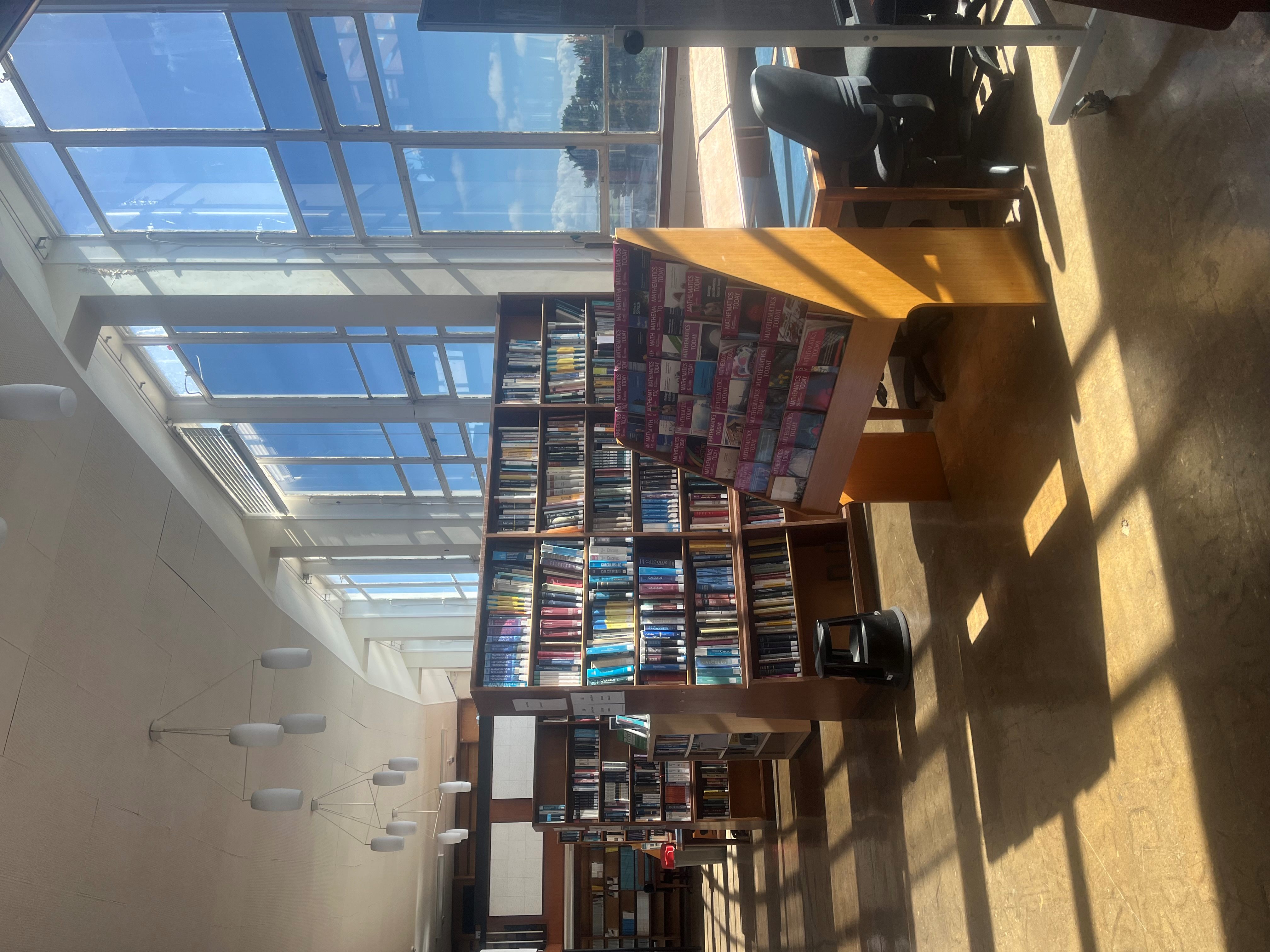
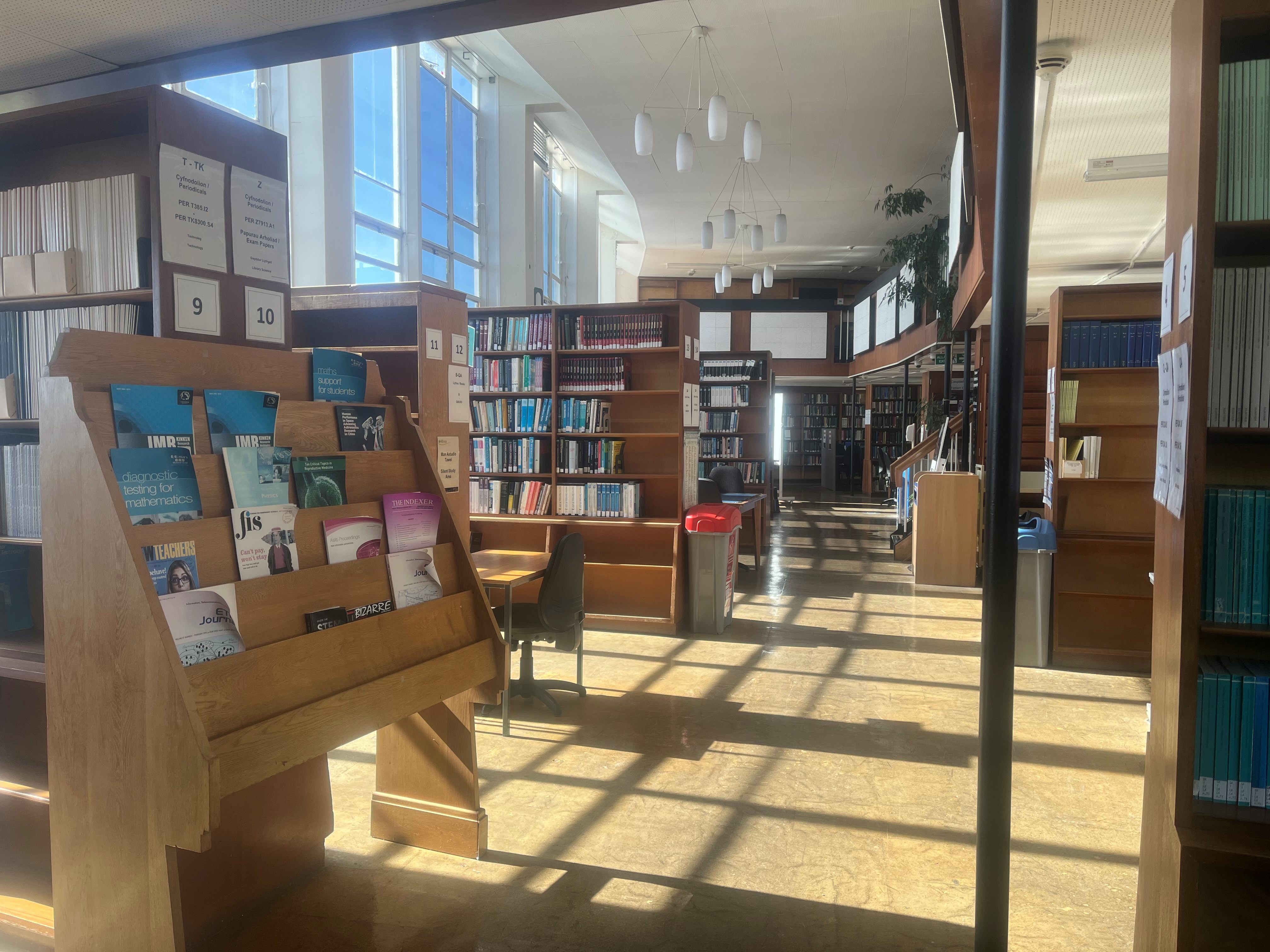
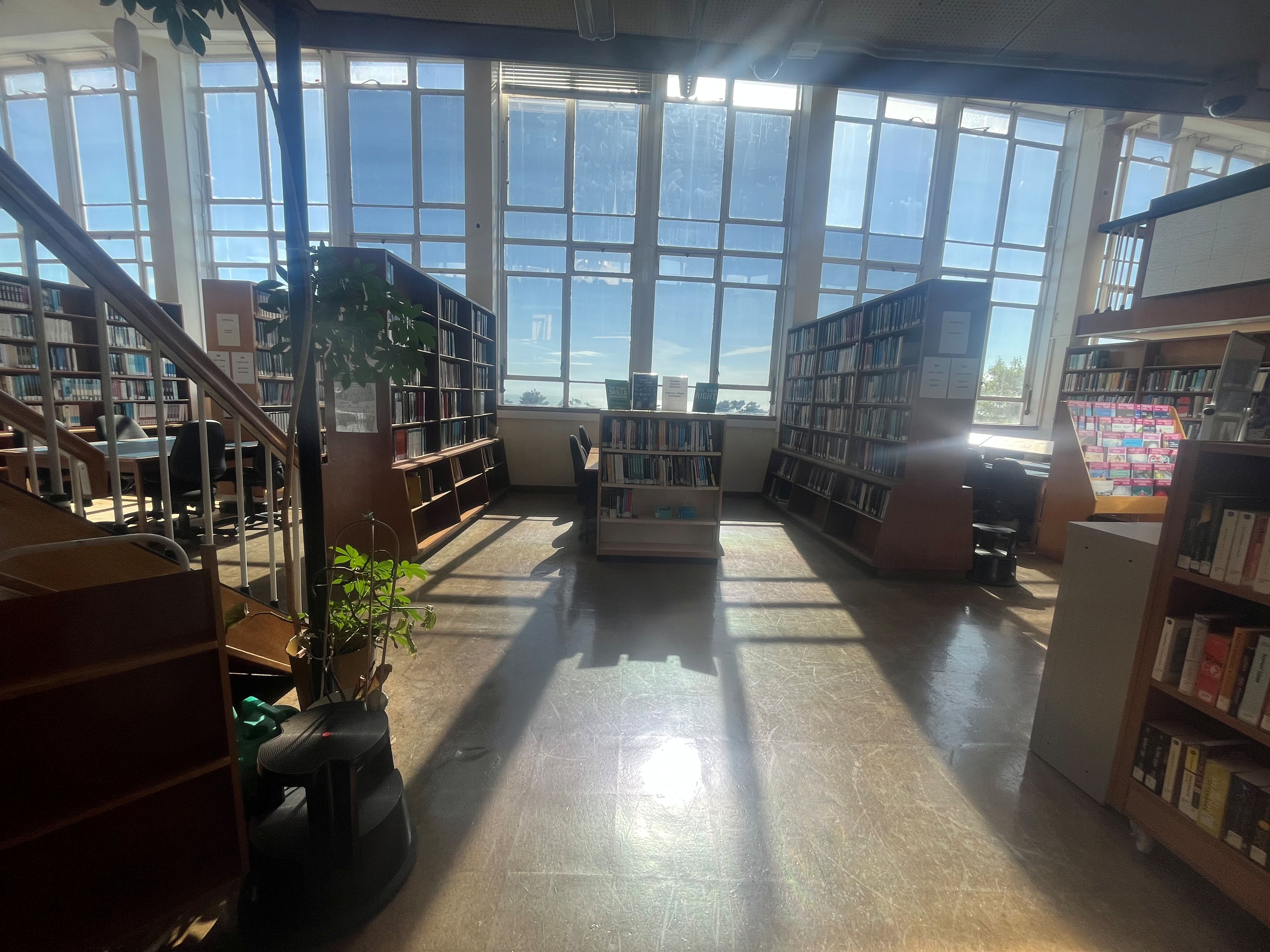
Tucked away on the fourth floor, behind the imposing red façade of the Physical Sciences Building, is the not-so-secret second library at Aberystwyth University. While it’s mainly visited by Maths, Physics and Computer Science students working nearby as a convenient (and scenic) study spot, hopefully some of the changes you’ll see here might inspire a visit to this charming library.
Recently efforts have been made by Subject Librarians Anita Saycell and Sarah Gwenlan to enhance the library with new displays and collections.
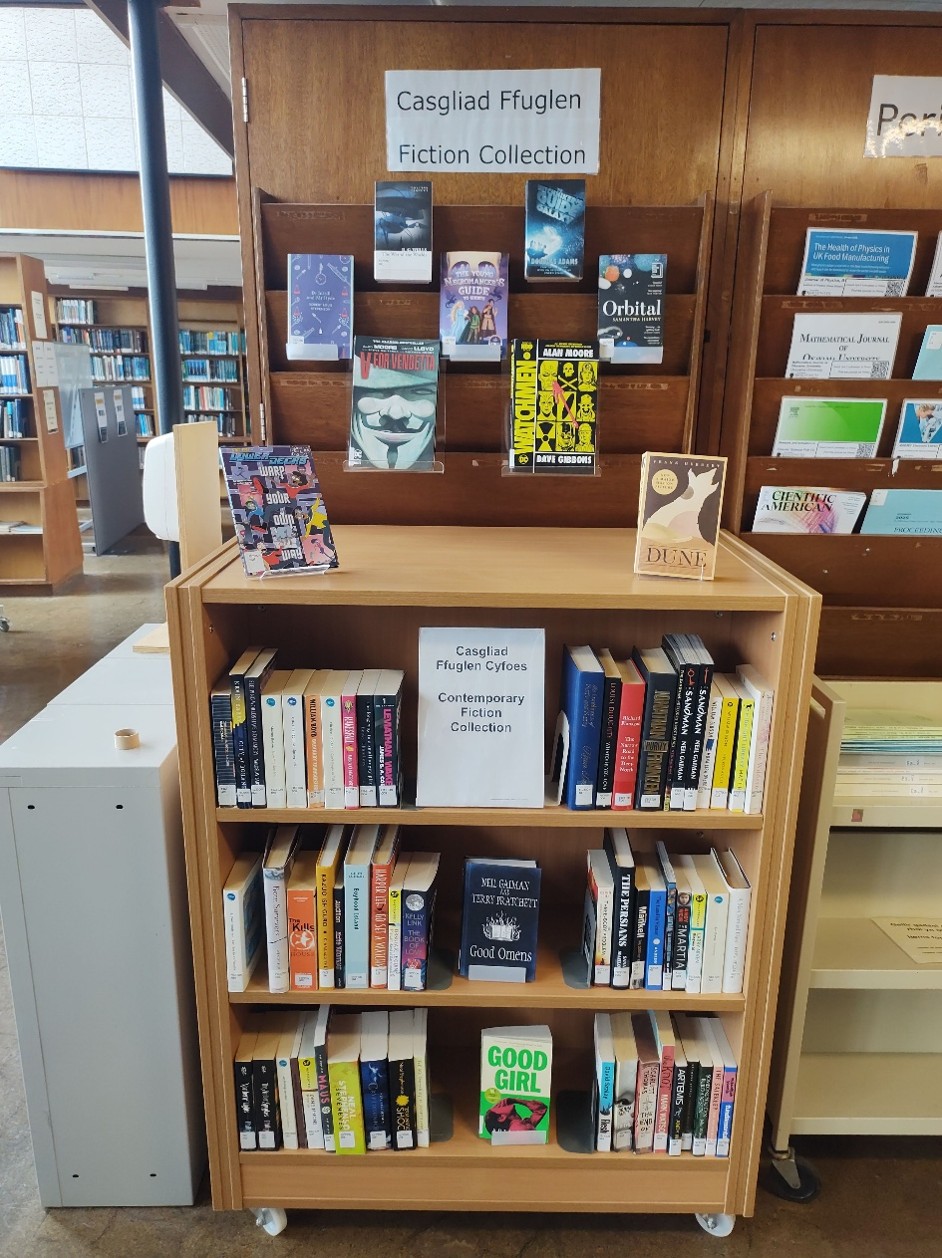
While the Library houses Maths, Physics and Computer Science collections and research materials, please don’t let that convince you that you shouldn’t settle in there with a good fiction book. The new fiction collection located in the Physical Sciences Library is on the right when entering the room, and contains books ranging from Frank Herbert’s Dune to Andy Weir’s Project Hail Mary.
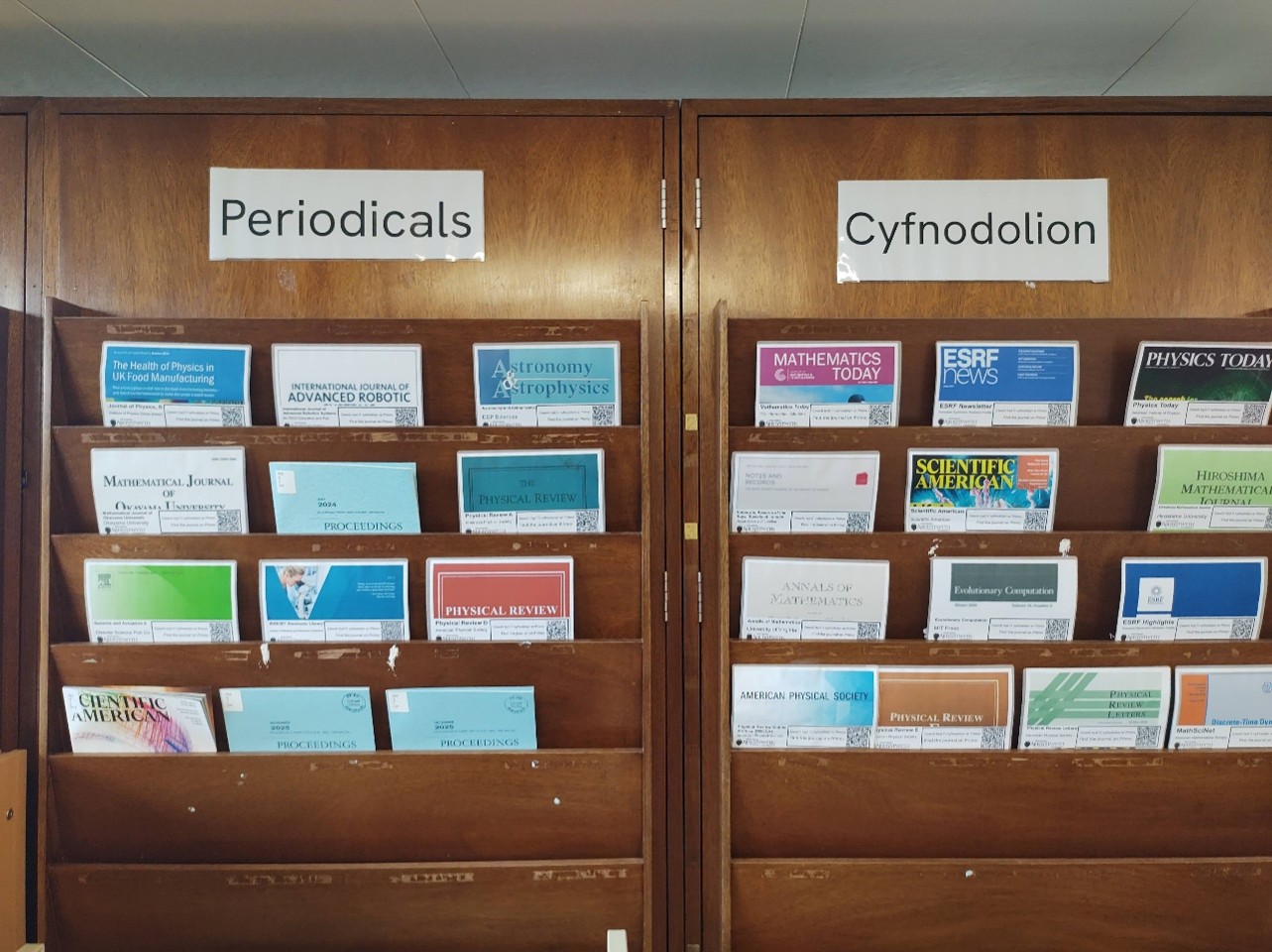
Next to this is another new display – one that represents the (frankly sprawling) periodicals collection of Library Services. These periodicals are already available online through Primo and on the shelves of the Physical Sciences Library, and on levels E and F of the Hugh Owen Library. This display is simply showing them off alongside their covers and an easy-to-use QR code for easy access.
Now that the academic year has ended, it’s a great moment to reflect on the impact of our digitisation service—and what a year it has been! Working closely with teaching staff and responding to sustained student demand, the service has delivered consistent access to key readings across departments.
A year in numbers
Our digitisation service has supported teaching and learning at scale:
379 combined reading lists processed—these include shared lists across multiple courses (e.g. Welsh/English or UG/PG equivalents)—representing 503 individual reading lists supported in total
2,210 extracts released to reading lists, comprising both book chapters and journal articles
40,813 pages digitised
12,134 students supported
These figures highlight not just volume, but reach: tens of thousands of pages made accessible to over twelve thousand students, directly embedded within their module reading lists.
It’s equally encouraging to see how actively this content has been used:
26,762 views
2,678 downloads
596 prints
This level of engagement shows that digitised readings are not just available—they’re being used in meaningful ways to support study, revision, and research.
A reliable, responsive service
The digitisation service has remained a reliable way for students to get hold of their core readings, helping make key materials accessible to everyone. Across a wide range of teaching needs, the team has delivered extracts promptly and in line with copyright requirements.
Don’t stop now: Summer access
While the academic year has come to an end, the digitisation service is still on hand to support your summer reading and research. If you’re continuing your research, preparing for next year, or simply following your academic curiosity, you can still request:
Book chapters
Journal articles
Thesis extracts
So, whether you’re getting ahead, catching up, or diving into something new, we’re here to help you keep your brain in motion over the summer months.
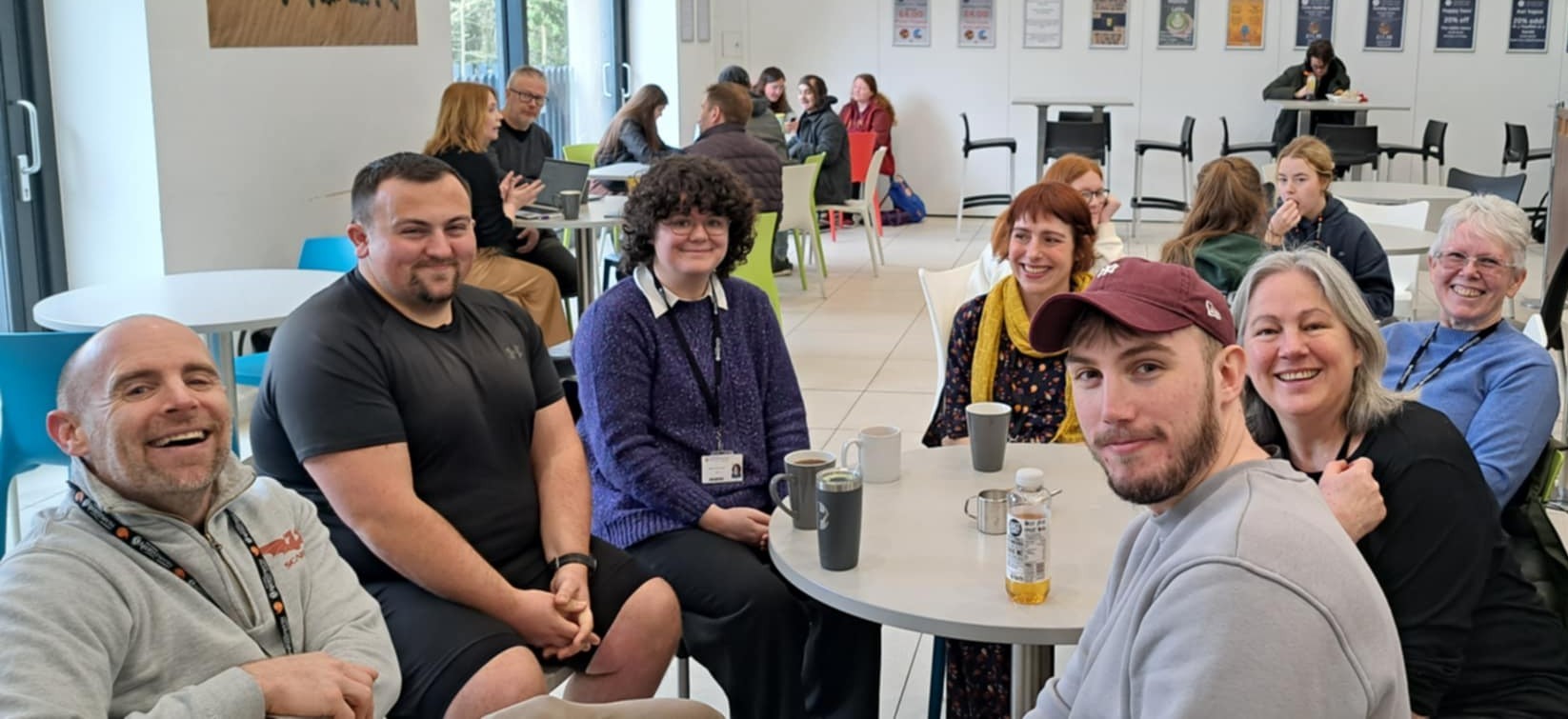
As Elizabeth Kensler prepares to leave Aberystwyth University’s Library Services, we want to take a moment to celebrate her contribution and the lasting impact she leaves behind.
Elizabeth has a remarkable ability to connect with people, colleagues, library users, and visitors alike, and to create an environment that feels genuinely welcoming and supportive. Exactly what a library should be. Through both her work and her presence, she has helped shape a service centred on people, not just processes (though anyone who’s worked with her will know she has a special appreciation for those too!).
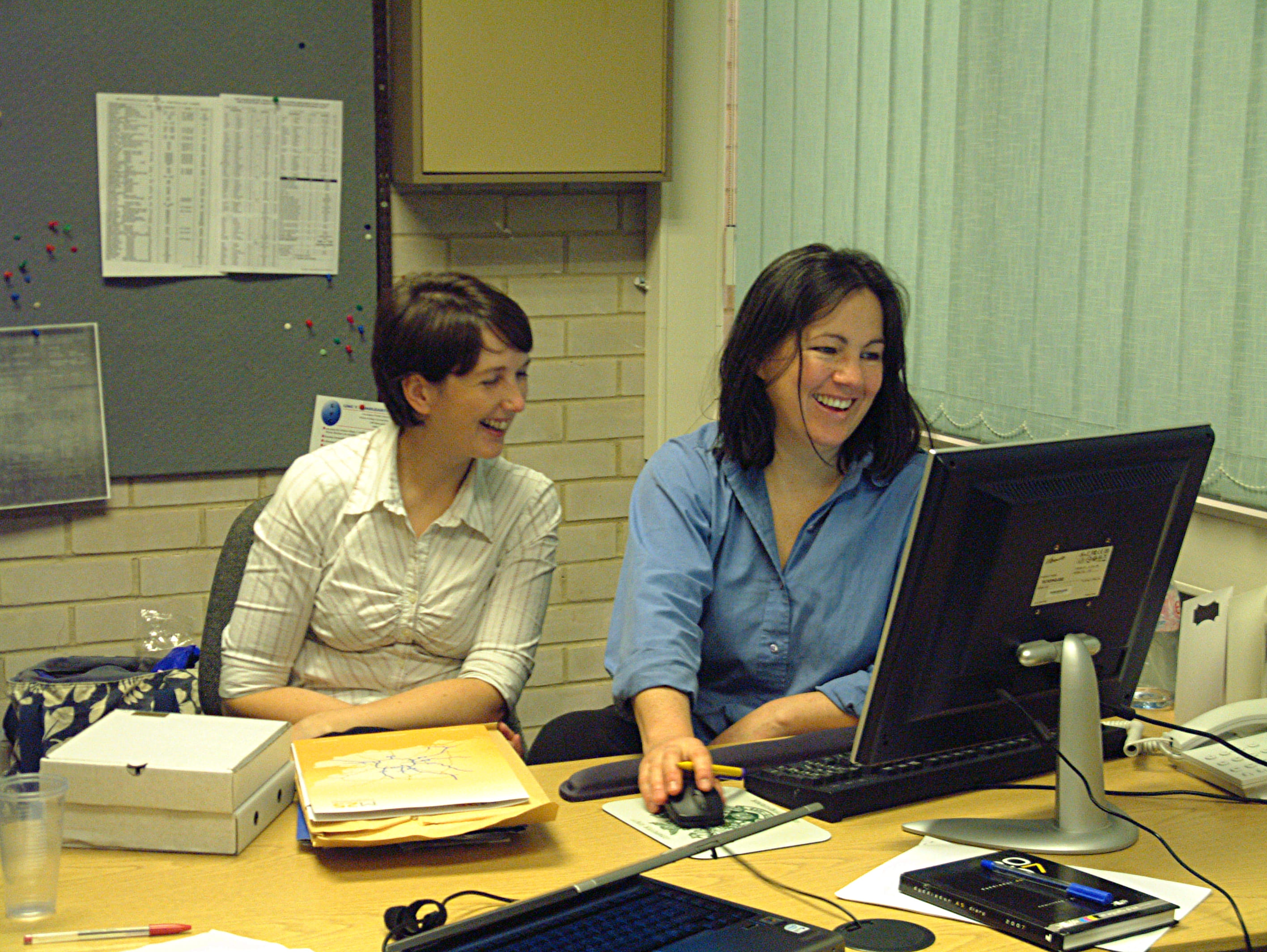
Nia and Elizabeth, 2008
Since 2008, Elizabeth and Nia Ellis have worked together as job share partners, starting out as Customer Service Managers.
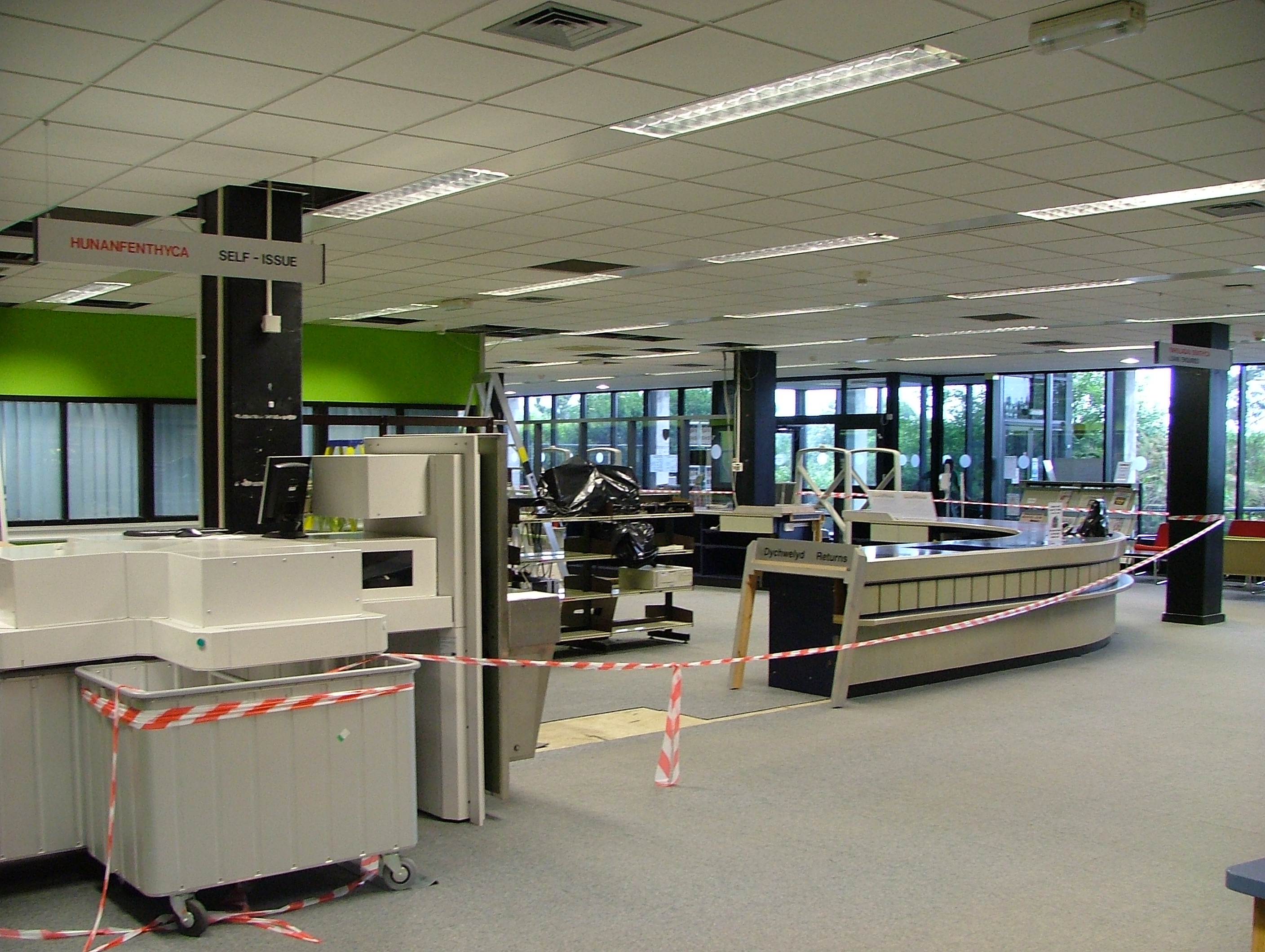
When we started our first task was to combine the Library Enquiry Desk with the IT Support Desk on Level D of the Hugh Owen Library. This necessitated bringing two verydifferent teams together and also redesigning the desk and D floor of the library.
The work of redesigning Level D was completed in Summer 2011.
Again in 2017 Elizabeth led the refurbishment of Thomas Parry Library, performing miracles to ensure that the library was ready for the start of the 2017 academic year. She worked tirelessly, inspiring those around her to go the extra mile to complete the work.
A big difference in those early years was working across Information Services and with colleagues from across the University to improve the Freshers’ Week experience for students. Through more effective collaboration, the long queues that had previously been considered completely normal were significantly reduced. She chaired the Induction Group for many years, coordinating its work and seeking opportunities to improve our practices and processes. This willingness to develop networks was a very important aspect of her work. This was not something she did as a matter of strategy, it was simply an integral part of her nature – an unparalleled communicator. By prioritising sharing information clearly and consistently, she influenced the practice of the whole department as colleagues understood and recognised the value and importance of our work.
The focus on the student experience has always been important to her, which is why learning about UX (User Experience) techniques has been so influencial. Being able to conduct our own research into students’ habits and needs in a much richer and deeper way than surveys was a turning point for us. Having evidence for developments and improvements was something completely logical, and through her enthusiasm and energy, she helped to spread the practice of consulting students and researching their habits. Elizabeth presented a paper on this subject (New approaches to improving the student experience at Aberystwyth University libraries: from Library Surveys to cognitive mapping) at the LibPMC 2023 conference.
Nia Ellis, Student and User Experience Manager
Elizabeth will be greatly missed across Library and Digital Education Services and beyond. She has always balanced strategic thinking and innovation with care for the people around her, and her influence can be seen not only in the services she has shaped, but in the ways colleagues work together every day.
I’ve been fortunate enough to have worked with Elizabeth for many years and always admired her as a role model; great knowledge and expertise as a librarian and a fine advocate for the library service at the University. It was only when she became my line manager that I discovered what an exceptional person she is and how lucky I was.
On top of that fierce professionalism and belief in the value of libraries to HE and to society, there was a never-ending source of kindness and humour. Whatever the challenge: university restructures, COVID, illness – Elizabeth was there again and again with her time, her generosity, and that way of inspiring you and making you feel better that you just can’t put a price on.
Joy Cadwallader, Librarian and Academic Engagement and Student Skills Lead
We are incredibly grateful for her energy, insight, and thoughtful leadership, and we wish her every success in the next chapter.
Today (21st May) is Global Accessibility Awareness Day
Within Student Journey, we have a specialised Accessibility and Wellbeing Team who work with students throughout the year. The Team includes over 50 non-medical helper staff who provide 1:1 mentoring or study skills support for students with a disability or learning difference.
Last year they supported over 800 of our students – the number of students they support has increased by 34% in the last five years.
Here’s what our students have been saying about the team this year:
…incredibly invaluable, allowing me to… remain in university through the several challenges that have occurred during my course.
…really appreciate …[having]…continued support throughout our entire degree from the same people (as opposed to them changing each year). I am autistic and that makes a real difference for me.
[The support worker] has single handily been the most important person in my university experience… without the services I would have less routine and interest from others which have been the two most vital components in my success in university.
We think that this student sums up the service perfectly: “Amazing…Absolutely brilliant…Fantastic…Phenomenal…Invaluable…Top tier”
But it’s not only these staff who are making sure that what we do is as accessible as possible. Here are some of the things that our other teams do.
Blackboard Content
Blackboard Ally is available for all students and staff at the university. This year 59,541 documents have been downloaded in an alternative format by 3,894 users. The most common format is Tagged PDF.
Staff have made 3,417 fixes to content – that’s 3,417 changes that make teaching materials more accessible to use.
The average Ally course score for 2025-26 courses in Blackboard is 72%.
In November 2025, AU entered the Blackboard Fix Your Content Day and were placed 3rd in the UK for the number of fixes to Blackboard content made.
Books and journal articles
All the book chapter and journal article scans that our digitisation service for reading lists are in an accessible format. They use OCR (Optical Character Recognition) scanning, which means that uploaded scans of book chapters and journal articles in reading lists are fully machine-readable, searchable, and accessible content. As well as complying with legislation, these scans are accessible for all learners. OCR scanned documents are compatible with assistive technologies such as screen readers, as well as having text navigation facilities.
As well as scanning items for reading lists, the team can also create accessible copies for books for students who have declared a disability to the university. We have a licence which allows us to make or find accessible copies of books if a suitable version is not available for us to purchase. If a text is not covered by the licence but we own an original copy, we may still produce an accessible copy for personal study or research.
This service is free of charge to eligible students and can be accessed by emailing digitisation@aber.ac.uk
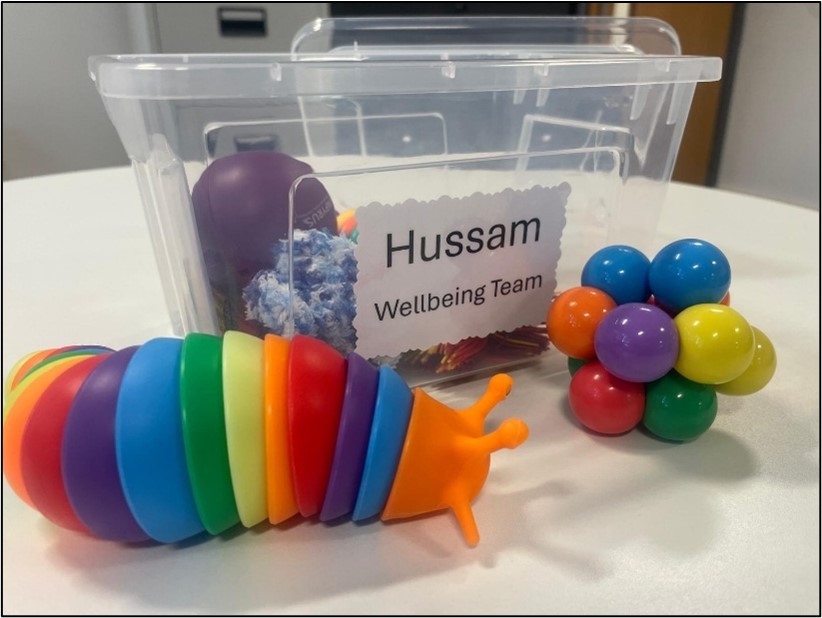
Sensory items for wellbeing sessions
Staff in our Wellbeing Service introduced boxes of sensory items that can be offered to students in Wellbeing sessions to help them manage need for self-stimulation (stimming). Here’s an example of the items available:
Using AI
Our new AI prompt library which is available to everyone include information about using AI for users with accessibility requirements. You can see some examples of this in some samples from the prompt library
Plain Language Rewriting
“Rewrite the following text in plain, easy to understand language while keeping the original meaning. Break complex sentences into shorter steps and remove unnecessary jargon. Highlight any terms that may still require explanation.”
Neurodiversity Friendly Step by Step Guide
Finding your way around
AccessAble is a brilliant resource that helps to make planning for and navigation of our Campus here at Aberystwyth that bit easier. It provides people with information about things like accessible parking space, ramp access, where hearing loops are and where they can find accessible toilets. This can be really reassuring for people as they plan to attend somewhere that is new and/or unfamiliar.