Am I allowed to use AI? (And other small, existential questions)

Am I allowed to use AI?
Is it cheating?
Will my lecturer know?
Am I accidentally helping to boil the oceans or fund a tech billionaire’s next rocket?

These are just some of the many, many questions around AI, and If you’ve asked yourself any of them recently, you’re not alone. AI has moved very quickly from “What even is this?” to “It’s everywhere and I’m not sure how I feel about it.” It can get pretty confusing.

That’s exactly why we’ve created our new AI Literacy course.

Rather than telling you what to do, the course focuses on helping you decide what’s right for you. Because using AI isn’t just a technical question, it’s an ethical one too.

As you move through the course, you’ll explore questions like:

  • What actually is AI?
  • Am I still doing my own thinking?
  • Can I trust this output?
  • What am I sharing, and where is it going?

We look at AI as a study partner, not a shortcut. It might be a tool that can help you plan, explain, or get unstuck, but it’s not there to replace your learning. Along the way, we connect AI to things that you will be developing at university, and which we hope will serve you well in the future: critical thinking, information literacy, and ethical awareness.

You’ll also explore what’s really happening when you use these tools, including data privacy, referencing pitfalls, accessibility, environmental impact, and how well (or badly) they handle the Welsh language.

Importantly, the course also makes space for a perfectly valid position: What if I don’t want to use AI at all?

We hope that the course will give you the confidence to make an informed choice, and not just follow the crowd.

AI isn’t going away. It’s already built into the tools you use every day, from search and email to library resources and learning platforms. This course isn’t about chasing the latest trend. It’s about helping you navigate a world where AI is already part of the landscape, and offering practical ways to think clearly, act responsibly, and stay in control.

The course is available to all students and staff via Blackboard Organisations and there is also a link here.
Updates from the Physical Sciences Library

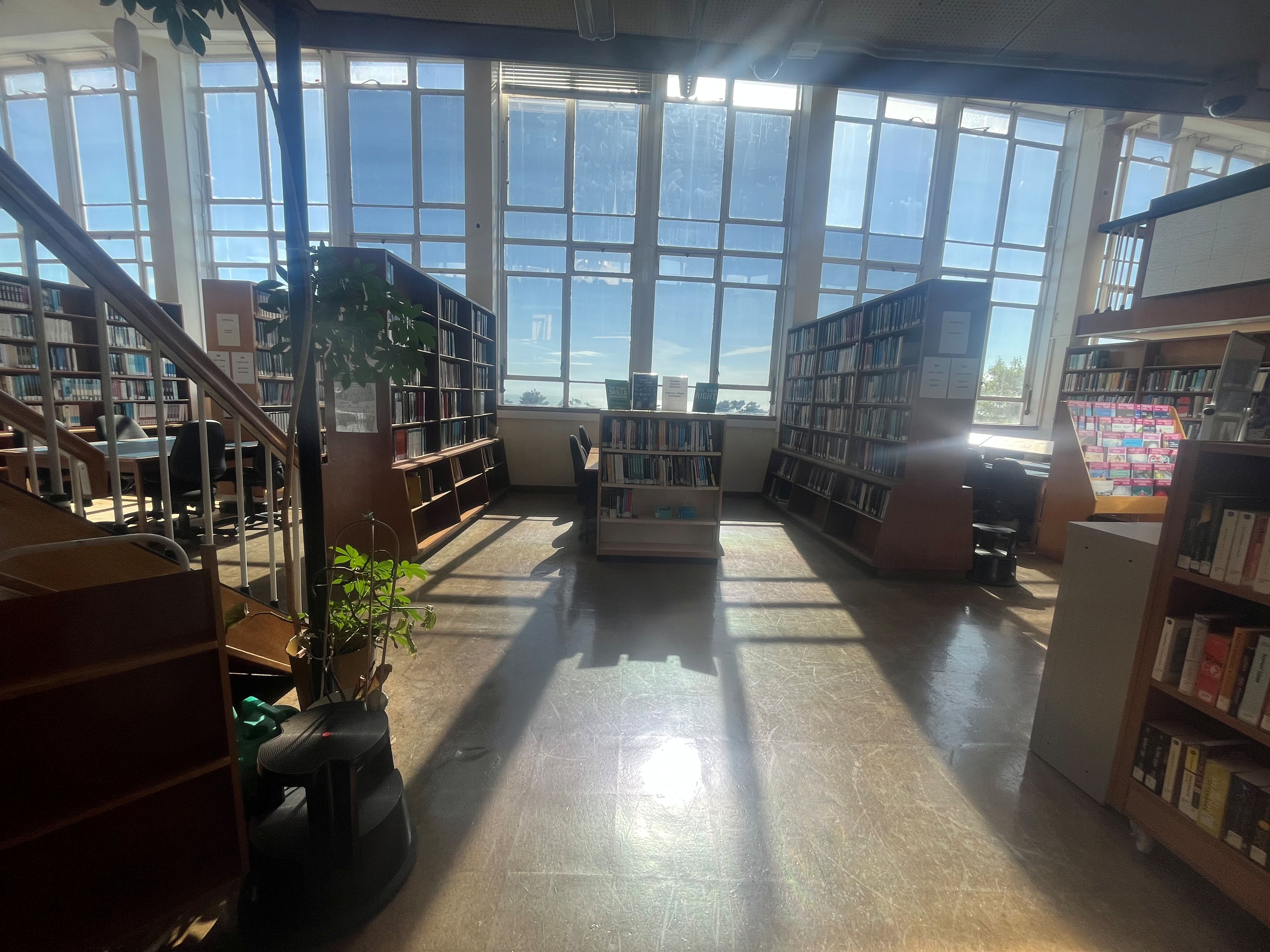
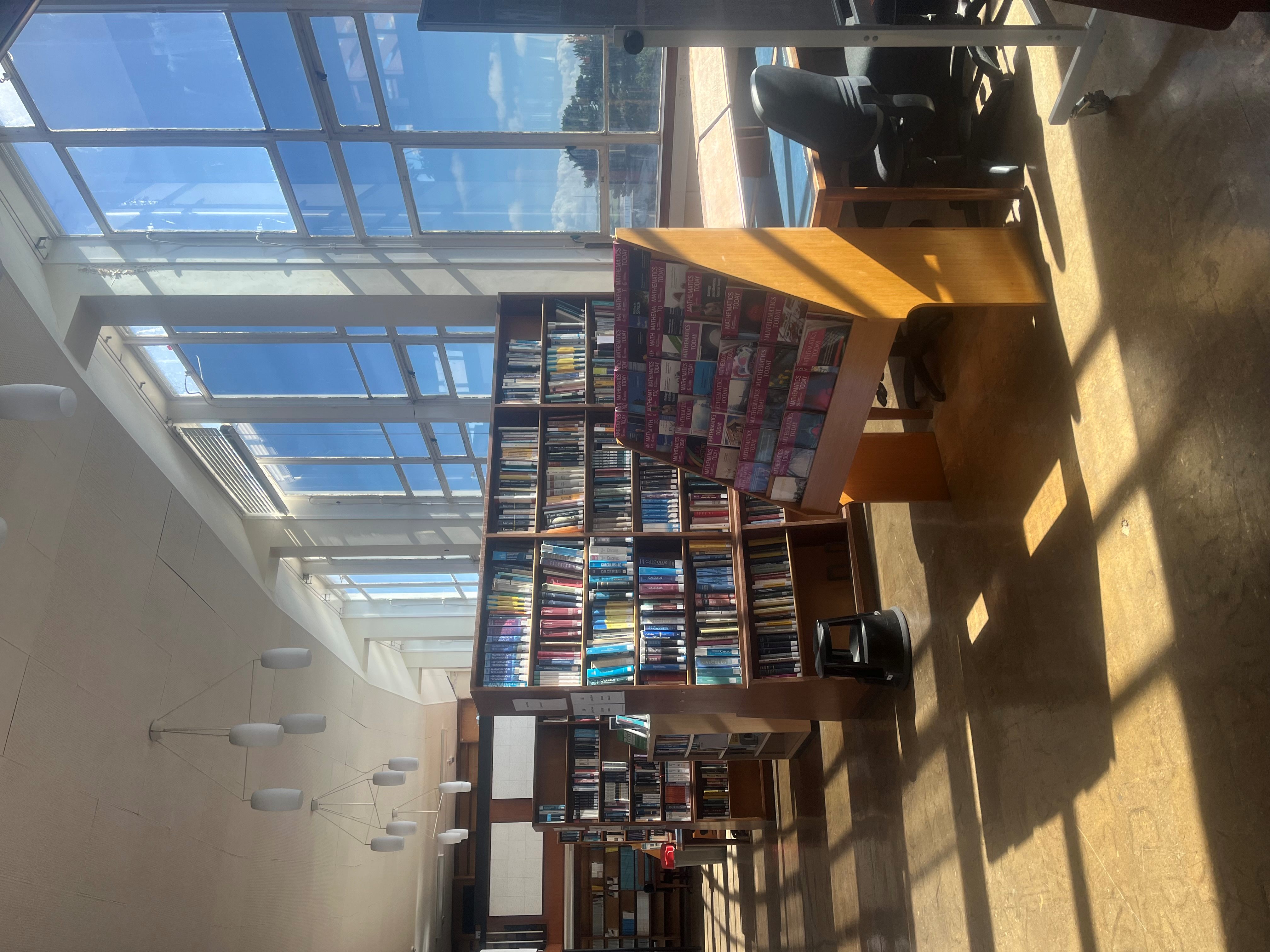
Tucked away on the fourth floor, behind the imposing red façade of the Physical Sciences Building, is the not-so-secret second library at Aberystwyth University. While it’s mainly visited by Maths, Physics and Computer Science students working nearby as a convenient (and scenic) study spot, hopefully some of the changes you’ll see here might inspire a visit to this charming library.

Recently efforts have been made by Subject Librarians Anita Saycell and Sarah Gwenlan to enhance the library with new displays and collections.

Physical Sciences Library

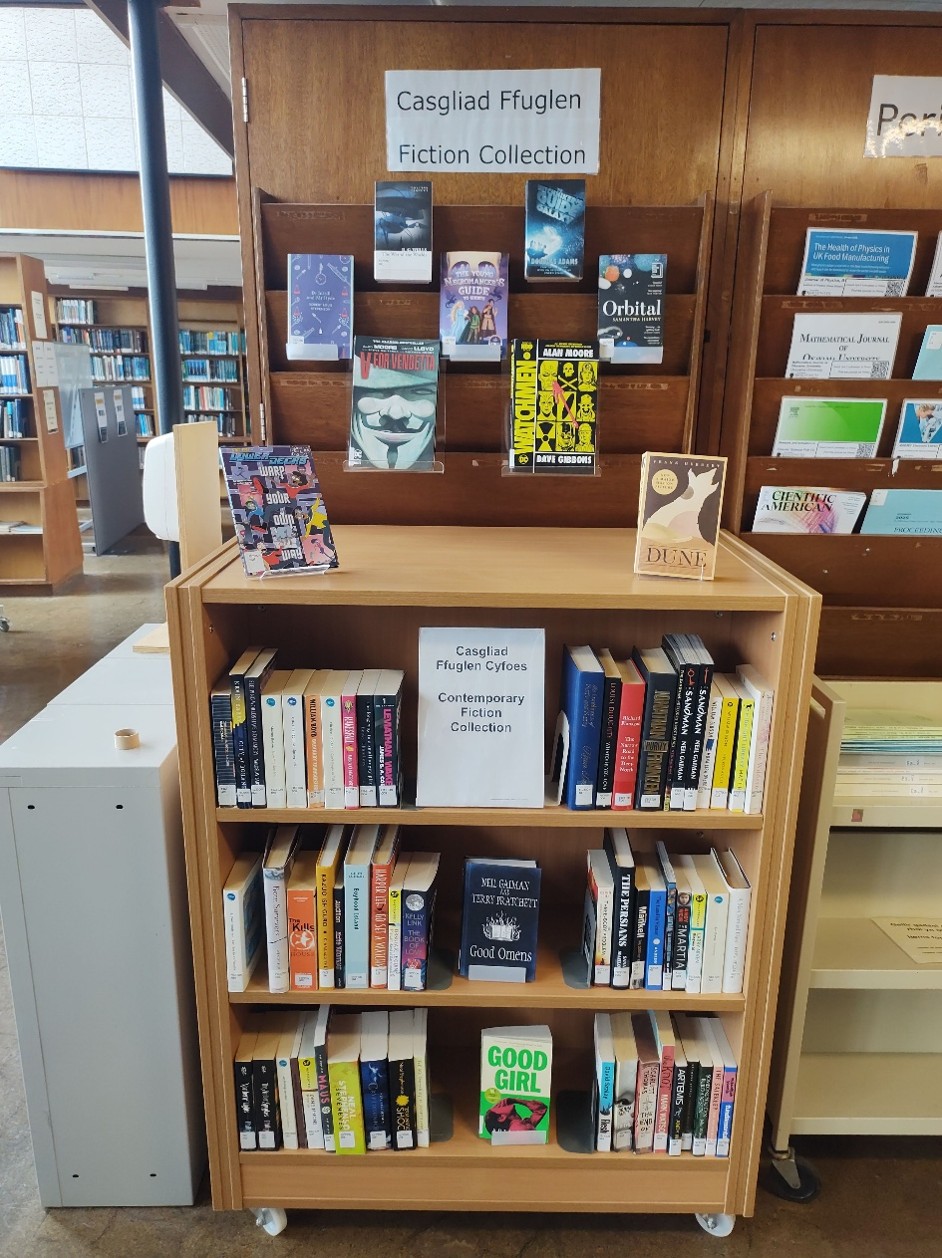
While the Library houses Maths, Physics and Computer Science collections and research materials, please don’t let that convince you that you shouldn’t settle in there with a good fiction book. The new fiction collection located in the Physical Sciences Library is on the right when entering the room, and contains books ranging from Frank Herbert’s Dune to Andy Weir’s Project Hail Mary.


Fiction collection in Physical Sciences library

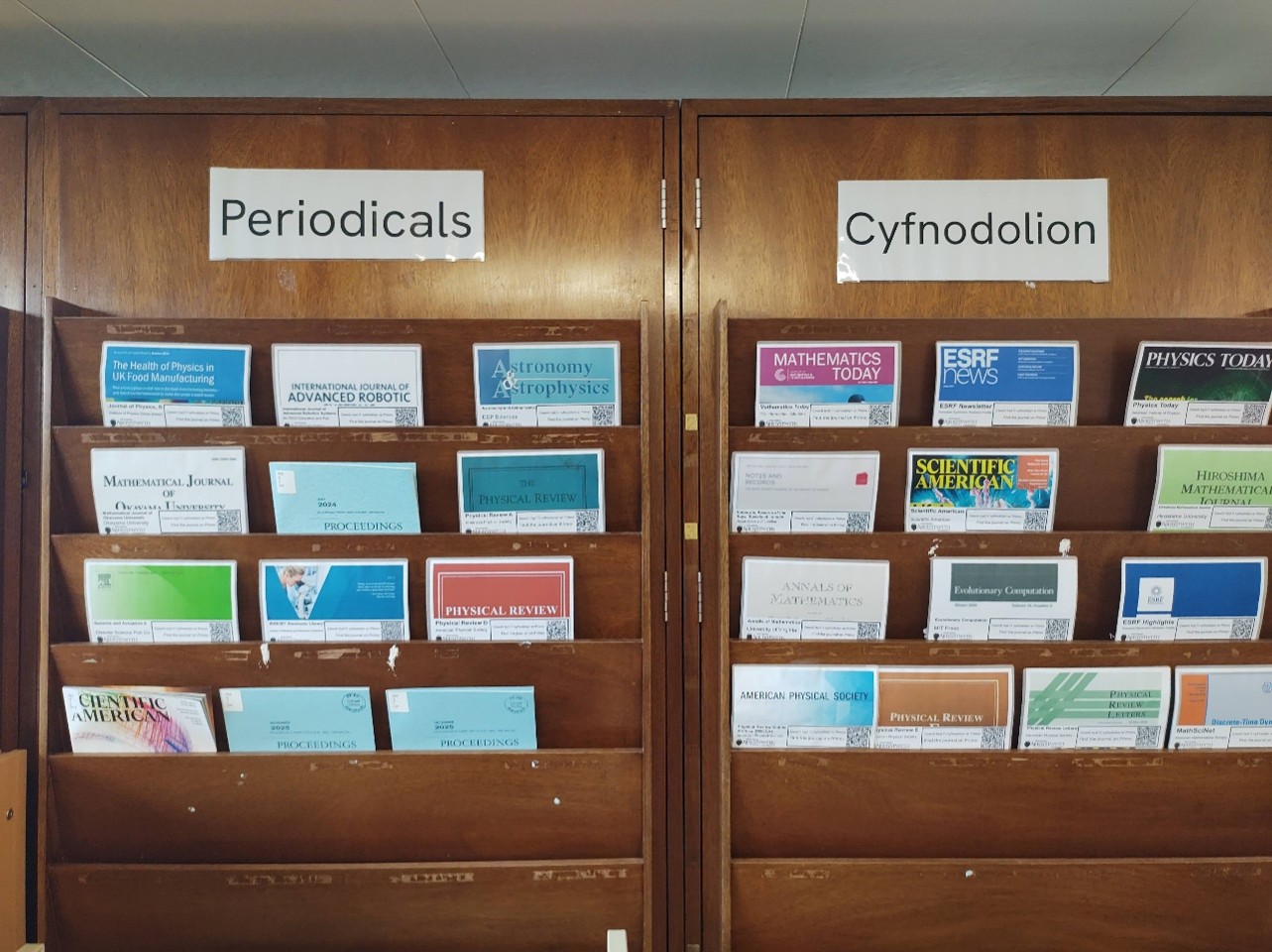
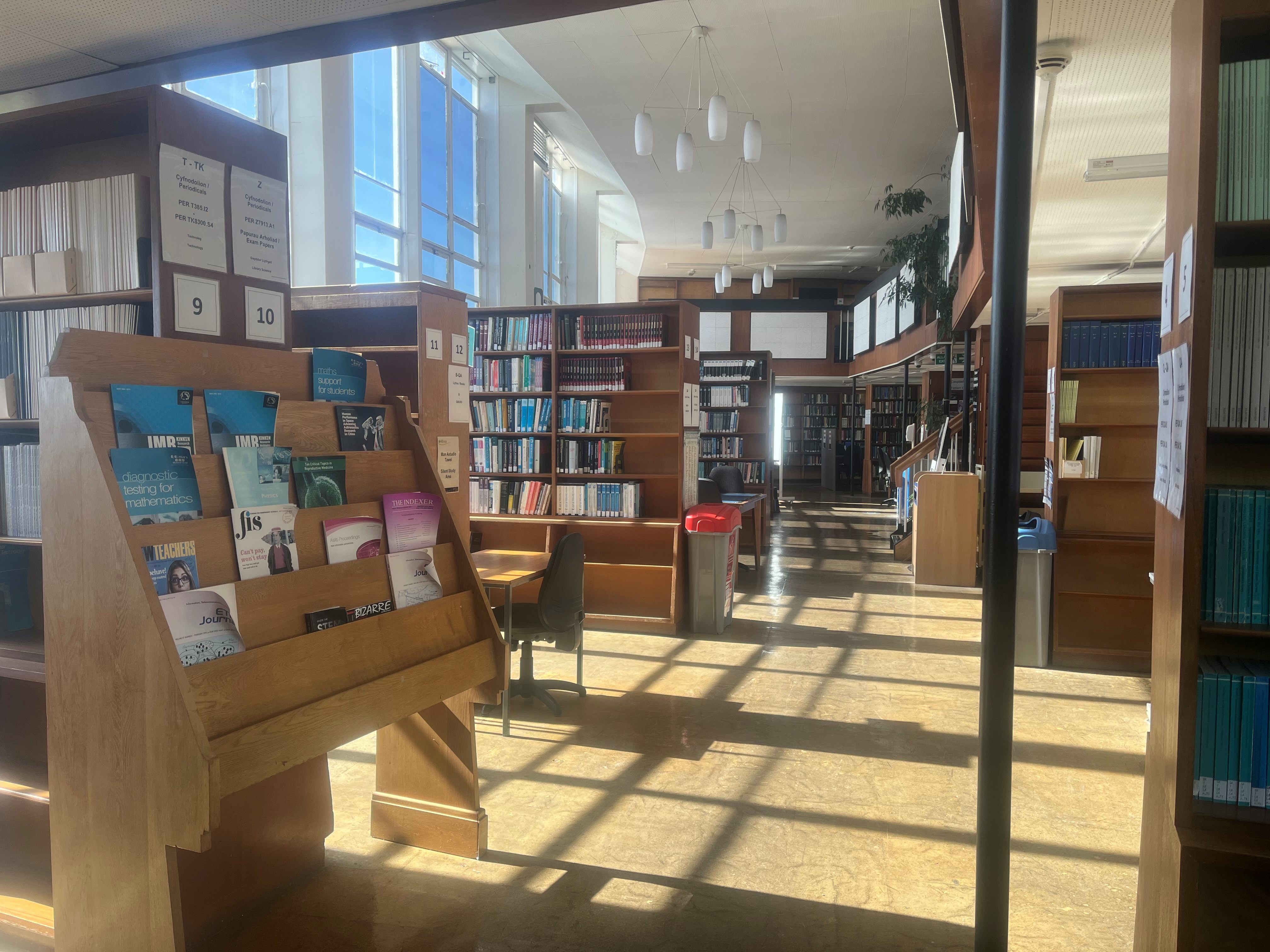
Next to this is another new display – one that represents the (frankly sprawling) periodicals collection of Library Services. These periodicals are already available online through Primo and on the shelves of the Physical Sciences Library, and on levels E and F of the Hugh Owen Library. This display is simply showing them off alongside their covers and an easy-to-use QR code for easy access.

Periodicals collection in the Physical Sciences Library

The Library is a great little spot both for working and just as a place to be, thanks to the work of its Subject Librarians! We hope you can come give it a visit, and maybe pick up a book along the way.
If you’re planning a visit, here’s the accessibility information for the library, and a short video showing the route from the Physical Sciences Building entrance and a view of the room itself.

Your Subject Librarians are:

Anita Saycell aiv@aber.ac.uk    Book time with Anita Saycell [aiv] (Staff) 

Sarah Gwenlan ssg@aber.ac.uk   Book time with Sarah Gwenlan [ssg] (Staff)

Find subject resource information on our LibGuides: https://libguides.aber.ac.uk/en


Physical Sciences Library

Thank you, Elizabeth 

As Elizabeth Kensler prepares to leave Aberystwyth University’s Library Services, we want to take a moment to celebrate her contribution and the lasting impact she leaves behind. 

Elizabeth has a remarkable ability to connect with people, colleagues, library users, and visitors alike, and to create an environment that feels genuinely welcoming and supportive. Exactly what a library should be. Through both her work and her presence, she has helped shape a service centred on people, not just processes (though anyone who’s worked with her will know she has a special appreciation for those too!). 

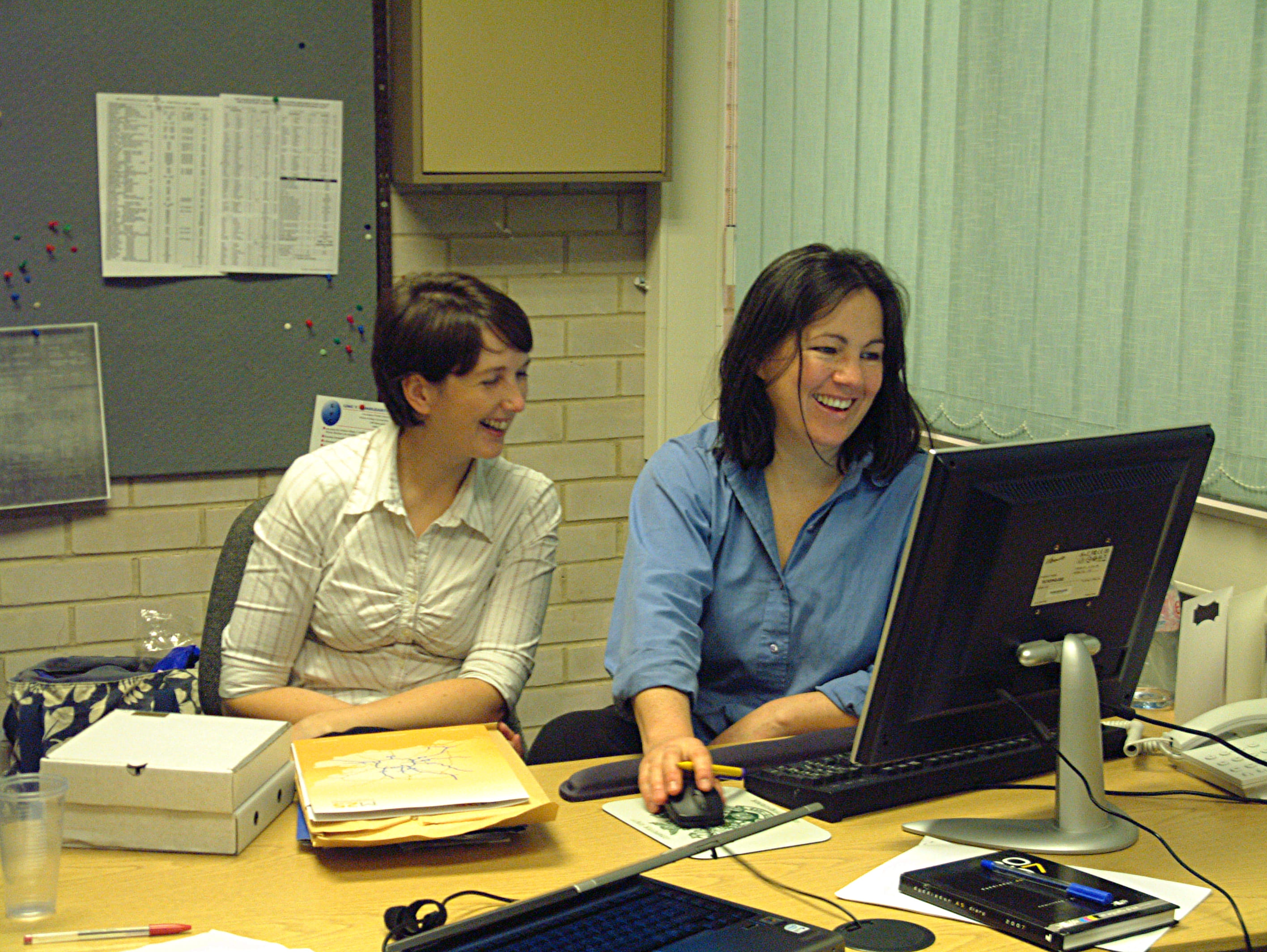
Nia and Elizabeth, 2008

Since 2008, Elizabeth and Nia Ellis have worked together as job share partners, starting out as Customer Service Managers.

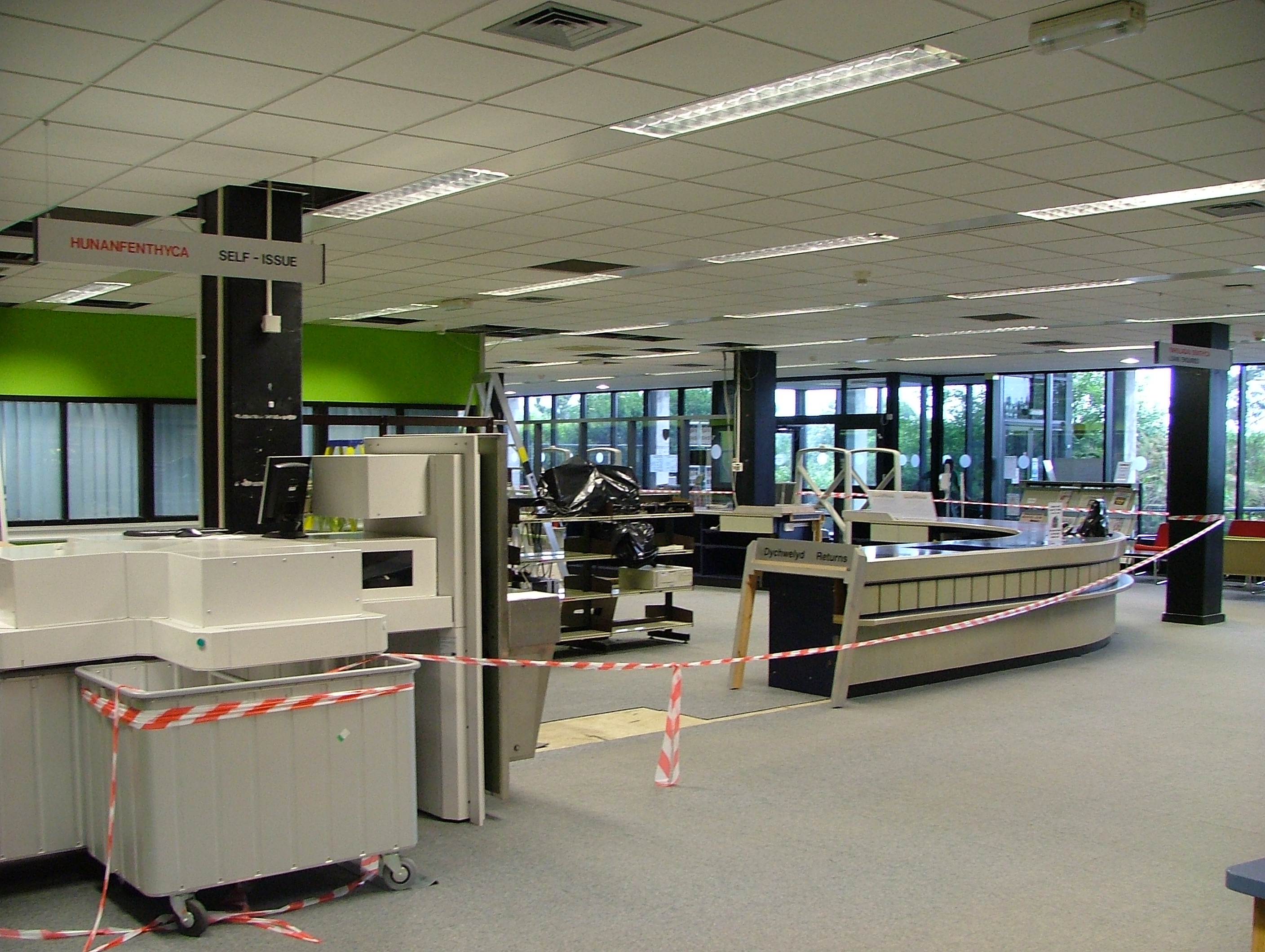
When we started our first task was to combine the Library Enquiry Desk with the IT Support Desk on Level D of the Hugh Owen Library. This necessitated bringing two very different teams together and also redesigning the desk and D floor of the library.

The work of redesigning Level D was completed in Summer 2011.

Again in 2017 Elizabeth led the refurbishment of Thomas Parry Library, performing miracles to ensure that the library was ready for the start of the 2017 academic year. She worked tirelessly, inspiring those around her to go the extra mile to complete the work.

A big difference in those early years was working across Information Services and with colleagues from across the University to improve the Freshers’ Week experience for students. Through more effective collaboration, the long queues that had previously been considered completely normal were significantly reduced. She chaired the Induction Group for many years, coordinating its work and seeking opportunities to improve our practices and processes. This willingness to develop networks was a very important aspect of her work. This was not something she did as a matter of strategy, it was simply an integral part of her nature – an unparalleled communicator. By prioritising sharing information clearly and consistently, she influenced the practice of the whole department as colleagues understood and recognised the value and importance of our work.

The focus on the student experience has always been important to her, which is why learning about UX (User Experience) techniques has been so influencial. Being able to conduct our own research into students’ habits and needs in a much richer and deeper way than surveys was a turning point for us. Having evidence for developments and improvements was something completely logical, and through her enthusiasm and energy, she helped to spread the practice of consulting students and researching their habits. Elizabeth presented a paper on this subject (New approaches to improving the student experience at Aberystwyth University libraries: from Library Surveys to cognitive mapping) at the LibPMC 2023 conference.

Nia Ellis, Student and User Experience Manager

Elizabeth will be greatly missed across Library and Digital Education Services and beyond. She has always balanced strategic thinking and innovation with care for the people around her, and her influence can be seen not only in the services she has shaped, but in the ways colleagues work together every day. 

I’ve been fortunate enough to have worked with Elizabeth for many years and always admired her as a role model; great knowledge and expertise as a librarian and a fine advocate for the library service at the University. It was only when she became my line manager that I discovered what an exceptional person she is and how lucky I was.

On top of that fierce professionalism and belief in the value of libraries to HE and to society, there was a never-ending source of kindness and humour. Whatever the challenge: university restructures, COVID, illness – Elizabeth was there again and again with her time, her generosity, and that way of inspiring you and making you feel better that you just can’t put a price on.

Joy Cadwallader, Librarian and Academic Engagement and Student Skills Lead

We are incredibly grateful for her energy, insight, and thoughtful leadership, and we wish her every success in the next chapter.  

AI Prompt Library

Library Academic and Digital Services have produced an AI Prompt Library.

These prompts give you some ideas about how you might want to use Generative AI in ethical and responsible ways.

Of course, there is no expectation that you do use AI – please see our recent blogpost on What if I don’t want to use AI?

Our guidance is split into the following sections:

  1. Advice for prompt design with Generative AI
  2. Prompt Library for Students and Subject Librarians
  3. Prompt Library for Staff
  4. Prompt Library for Researchers

If you use a prompt in your studies or work that you would like to share, please contact us on librarians@aber.ac.uk.  We’d love to include it in our AI Prompt Library.