The library: exam season survival starts here!

It’s that time again. You know the one. The countdown is on, the library is filling up, and suddenly everyone’s talking about revision and exams. We’ve all been there, and while exams aren’t exactly anyone’s favourite, they’re also your chance to show off everything you’ve learned this year.

Take a breath. You’ve got this — and support is available right here in the library.

Revision, but make it work for you

There’s no “one-size-fits-all” when it comes to revising. Some people swear by colour-coded notes and flash cards, others need background music, and some just want total silence and a strong coffee. The good news? There’s loads of support in the library to help you figure out what works best for you.

Ready, Steady, Revise with AberSkills

Check out the AberSkills site – it has a whole Revision and Exams section packed with:

  • Practical guidance on how to revise effectively including where to find past papers
  • Different revision methods to try (beyond just re-reading notes)
  • Top tips and advice from your peers who’ve been through it already

Whether you’re cramming, planning weeks ahead, or somewhere in between, it’s a solid place to start.

Back to the reading list

Now’s a good time to re‑acquaint yourself with your module reading list. You don’t need to read everything cover to cover — think of it as a refresh rather than a restart.

Revisiting key texts can help you:

  • Fill in gaps in your understanding
  • Reconnect lecture topics with core readings
  • Strengthen your confidence when revising tricky areas

Use your reading list to focus on essential chapters or sections linked to exam topics, and dip back into recommended texts for clarification or examples. The library has copies available so you can revisit the material whenever it suits your revision routine. You can find everything easily through the Aspire reading lists and Primo, the library catalogue, to check availability, access online texts, your borrowing history, or locate items on the shelves.

Effective Study Collection

Not sure how to revise, not just what to revise? The Library’s Effective Study Collection has your back.

This print and online collection is packed with revision and study skills books designed to help you study smarter. Whether you’re looking for quick tips or a full revision strategy overhaul, these books are perfect for dipping into when you need extra guidance. Ideal for brushing up on skills, boosting confidence, or trying a new approach to studying. Have a browse next time you’re in – you’ll find the collection on Level F, opposite the lift in the Hugh Owen Library, and opposite the Enquiry Desk in the Physical Sciences Library.

Find Your Perfect Study Spot

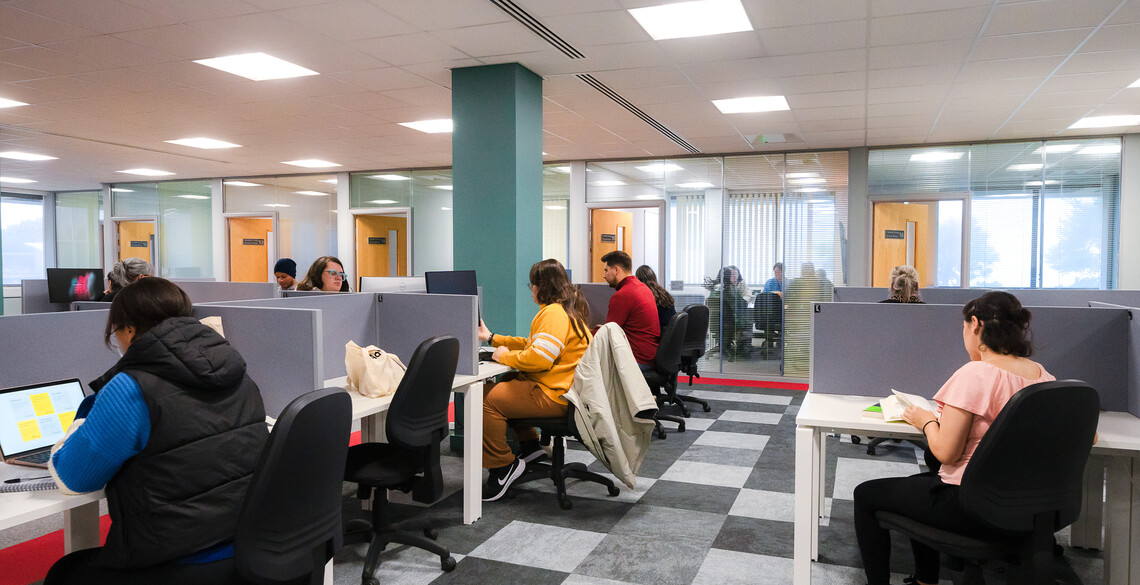
It’s all about location, location, location! If you need quiet focus time, the Hugh Owen Library,and the Physical Sciences Library on campus, as well as The Workstation in town have plenty of quiet study spaces designed for revision.

Night owl? Early‑morning crammer? Somewhere in between?
Revision doesn’t keep office hours — and neither does the library. During the exam and revision period, all floors of the Hugh Owen Library are open 24/7 so you can dip into a book, double‑check a reference, or squeeze in some last‑minute revision whenever motivation strikes. And if you’re studying after core hours and fancy revising at 2am, just make sure you’ve got your Aber Card to get in and out of the Hugh Owen Library.

Exams are challenging – there’s no denying it – but when you step back, just remember that they are just one part of your university journey. Be kind to yourself, take breaks, eat actual meals (not just snacks), and get some sleep. Making the most of the revision support and study spaces available in the library can really help you stay on track.

You’ve learned a lot — now’s the time to bring it all together.

Good luck!

The usefulness of reference generators…and a word of caution

Reference generators like MyBib and Scribbr have become popular tools for students navigating the complexities of academic writing. These tools simplify the process of formatting citations and bibliographies, which means you get to save some precious time! However, while they are good starting points to quickly generate a reference, you should approach them with responsibility and caution.

Strengths of MyBib and Scribbr

  1. Ease of Use: Both MyBib and Scribbr are user-friendly, offering intuitive interfaces that allow you to input resource details quickly and generate citations in referencing styles like APA, MLA, Harvard and many more.
  2. Key Features:
    • Creates references for a variety of resources, including books, e-books, journal articles, websites and more!
    • MyBib integrates seamlessly with platforms like Word, ensuring smooth workflows during document drafting.
    • Scribbr offers features like secure backups and annotations to enhance organisation and protect work.
  3. Free Accessibility: Both tools are free to use, making them accessible to students across various academic levels. You can use them without an account or sign up for a free account to unlock more features.

Limitations to Consider

While these tools are helpful, they are not perfect. You should be aware of the following limitations:

  1. Accuracy Issues:
    • Citation generators can occasionally misinterpret uncommon or complex sources, leading to formatting errors.
    • Automated tools may struggle with non-standard references such as datasets or foreign-language texts.
    • Common errors by these tools are capitalisation, punctuation, spacing, formatting and even incorrect information or placement.
  2. Over-Reliance Risks:
    • Blindly trusting these tools without verifying the output can result in incorrect citations that compromise good academic practice. Do not just copy and paste the reference from MyBib or Scribbr directly into your assignment without checking (and checking again!) for accuracy.
    • Errors in citations can lead to deductions in grades and/or even accusations of plagiarism.

Best Practices for Responsible Use

To use citation generators effectively while minimising risks, you should follow these guidelines:

  1. Verify Every Citation: Always double-check the generated references against official style guides and your departmental guidelines to ensure accuracy and that you don’t lose marks for your referencing.
    • Ensure you’re following your departmental referencing style – check your department and module handbook.
    • Check the generated reference against the examples given in the Referencing and Plagiarism Awareness LibGuide. Tab 8 of the LibGuide has departmental referencing examples – find your department and cross check the reference for the source used (e.g. book, e-book, article, website etc.) is written in the correct format and order.
    • Seek guidance from your Subject Librarian. They offer one-on-one consultations and are experts in the specific referencing styles used in your fields of study.
  2. Understand reference rules: Familiarise yourself with the principles of academic referencing to spot errors and make necessary corrections – these reference generator tools are handy, but they can’t replace the skill of and the importance of knowing how to reference correctly.
  3. Use as a Starting Point: Treat tools like MyBib and Scribbr as initial aids rather than definitive solutions. They simplify the process but do not replace critical thinking or attention to detail.
  4. Cross-Check Sources: For complex or uncommon sources, consult additional resources or seek guidance from your Subject Librarian.
  5. Avoid Over-Reliance: Make sure to find a good balance between automation of these tools and manual effort—it’s all about staying in control of your academic work and learning the skill of referencing for yourself.

Yes, MyBib and Scribbr are valuable tools for simplifying citation management for academic writing. Their ease of use and accessibility make them ideal starting points for working on assignments. However, a few words of caution. They are not flawless, foolproof nor entirely reliable – it is essential that you double check and verify what is generated for accuracy. These tools should not be used as a substitute for a comprehensive understanding of citation and referencing style rules. Responsible use of these tools ensures that good academic practice is upheld while benefiting from their convenience.