You probably don’t need us to tell you—there are a lot of AI tools out there. While ChatGPT might have grabbed the headlines early on, Perplexity AI is quickly becoming one of our favourites here in the library.

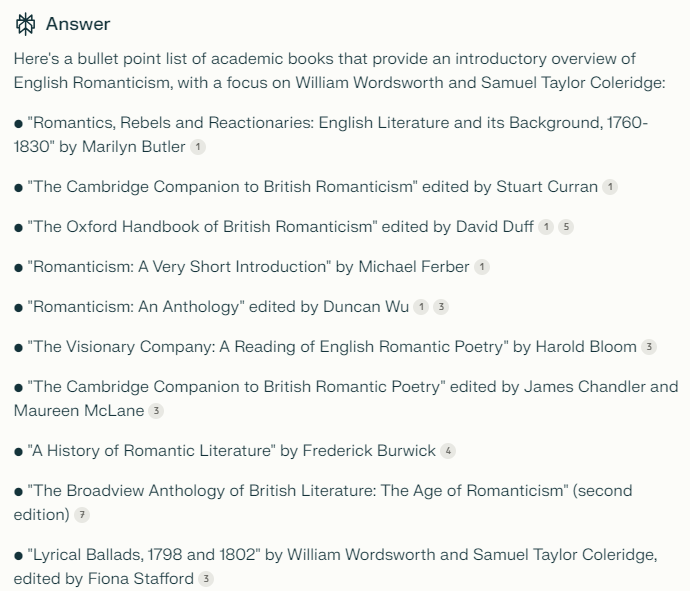
Perplexity AI is making waves in the world of information retrieval, and for good reason. Unlike its more conversational counterpart, ChatGPT, which often indulges in lengthy dialogues, Perplexity adopts a direct and efficient approach to answering queries. This makes it an ideal tool for those who need quick facts, thorough research, or insights into specific topics. Not only that, but it provides citations for all its responses.
Why Choose Perplexity?
Here are the standout features that make Perplexity a top choice:
- Real-Time Information: Perplexity pulls fresh data directly from the web, ensuring you always get the most current information.
- Clear Summaries: Instead of bombarding you with endless links, it delivers concise, direct answers to save you time.
- [This is the big winner for us] Fact Verification: Every response comes with citations, so you can easily verify the credibility of the information and explore further if needed.
How can Perplexity help you?
- Resource discovery. It can suggest effective keywords or phrases to refine your searches in the library catalogue or other online databases. (Stay tuned for our upcoming blog post on smart keyword searches)
- Study Aid: It can quickly clarify topics, provide concise explanations, or further explore topics for better understanding, all of which can save time during study sessions.
- Fact-Checking: Perplexity can quickly verify claims or statistics for essays or presentations, ensuring your work is both accurate and credible.
Some Things to Remember About Perplexity
- Limited Conversation Depth: Perplexity isn’t as good as ChatGPT at maintaining contextual follow-ups or extended conversational exchanges.
- Reliance on External Sources: While citations are a strong feature, the tool’s accuracy depends on the quality of its referenced sources. Always cross-check critical information where possible.
- No Creative or Open-Ended Outputs: Perplexity isn’t designed for tasks like creative writing, brainstorming, or exploratory discussions—ChatGPT is much more suited to these tasks.
Putting it All Together.
Perplexity AI is a powerful tool for students and researchers, offering quick access to up-to-date information and helpful citations for fact-checking and further study.
Unlike ChatGPT, which excels in conversations, Perplexity delivers concise answers, making it ideal for academic work. It also helps you to discover further resources by suggesting effective search keywords.
However, it lacks the conversational depth of ChatGPT, and its accuracy depends on the quality of the sources that it cites. By combining both tools, you can make the most of your study time and make your research process more focused and effective.