Fiction in Translation

Literature in translation is a great way to get a glimpse of other cultures. Translated works are generally shelved with works in the original language, so if you are looking to broaden your reading horizons, don’t be afraid of exploring sections of languages you don’t speak (yet!).

If you have moved to Aberystwyth for study or work and don’t have knowledge of the Welsh language, translations found in in the Celtic Collection can be a good way into the literary culture of Wales. Classics of Welsh literature (Kate Roberts, Islwyn Ffowc Elis, Saunders Lewis, the Mabinogion) have been translated widely (including editions in French, German, Italian, in addition to English).

Contemporary Welsh language novels also find an international audience. Recently, Manon Steffan Ros’s novel, Llyfr Glas Nebo has already been translated into Polish, Catalan, Spanish, French, Italian, Arabic, Vietnamese, Turkish and Korean with translations into a dozen more languages in preparation. You can find the author’s own English translation of Llyfr Glas Nebo (The Blue Book of Nebo) shelved with the original in the Celtic Collection.

The Celtic Collection is inherently international in nature, featuring materials about and in the languages of Wales, Ireland, Scotland, Brittany, Cornwall and Mann. A particularly intriguing aspect of the collection is translations of works in other languages into Welsh. In the collection you can find works by Albert Camus (Y Dieithryn = L’Étranger), Jean-Paul Sartre (Caeëdig ddôr = Huis clos) Franz Kafka (Metamorffosis) among many others. Also, in Hugh Owen Library, Asterix the Gaul speaks Welsh and Irish and Tintin speaks Breton.

A university library is always a mirror of what is taught and researched at that institution. In addition to the eight languages that are taught between the departments of Modern Languages and Welsh & Celtic Studies, you will also find translations of literature from many other languages currently or previously researched at the university.

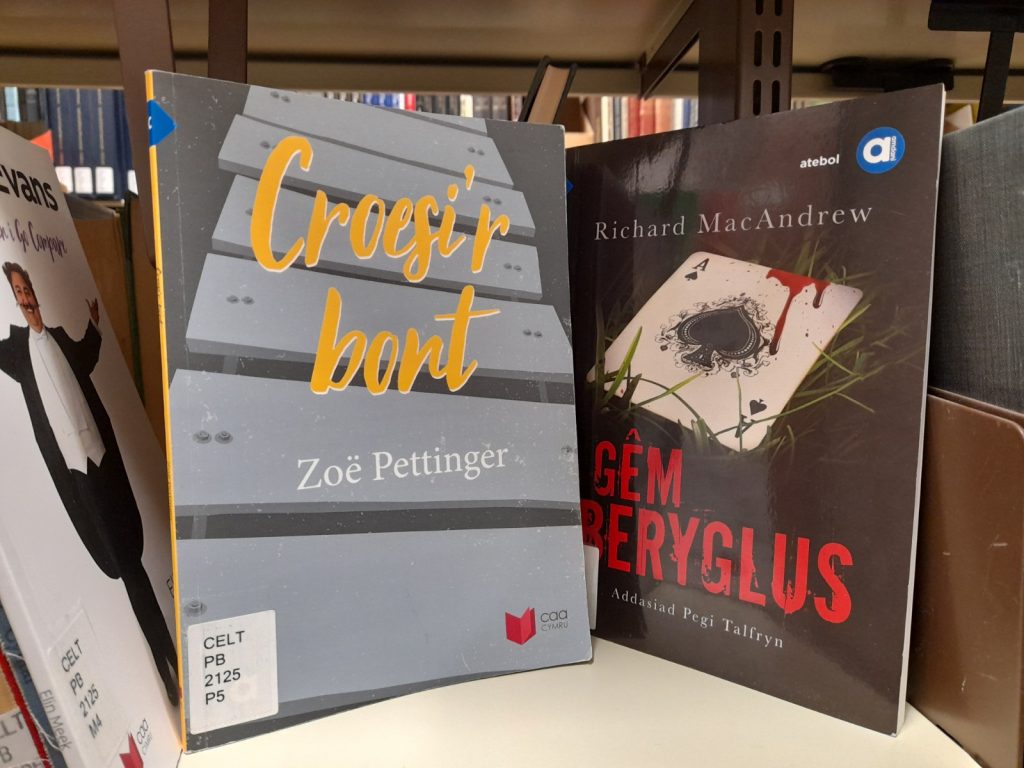
Here’s a selection of our favourites:
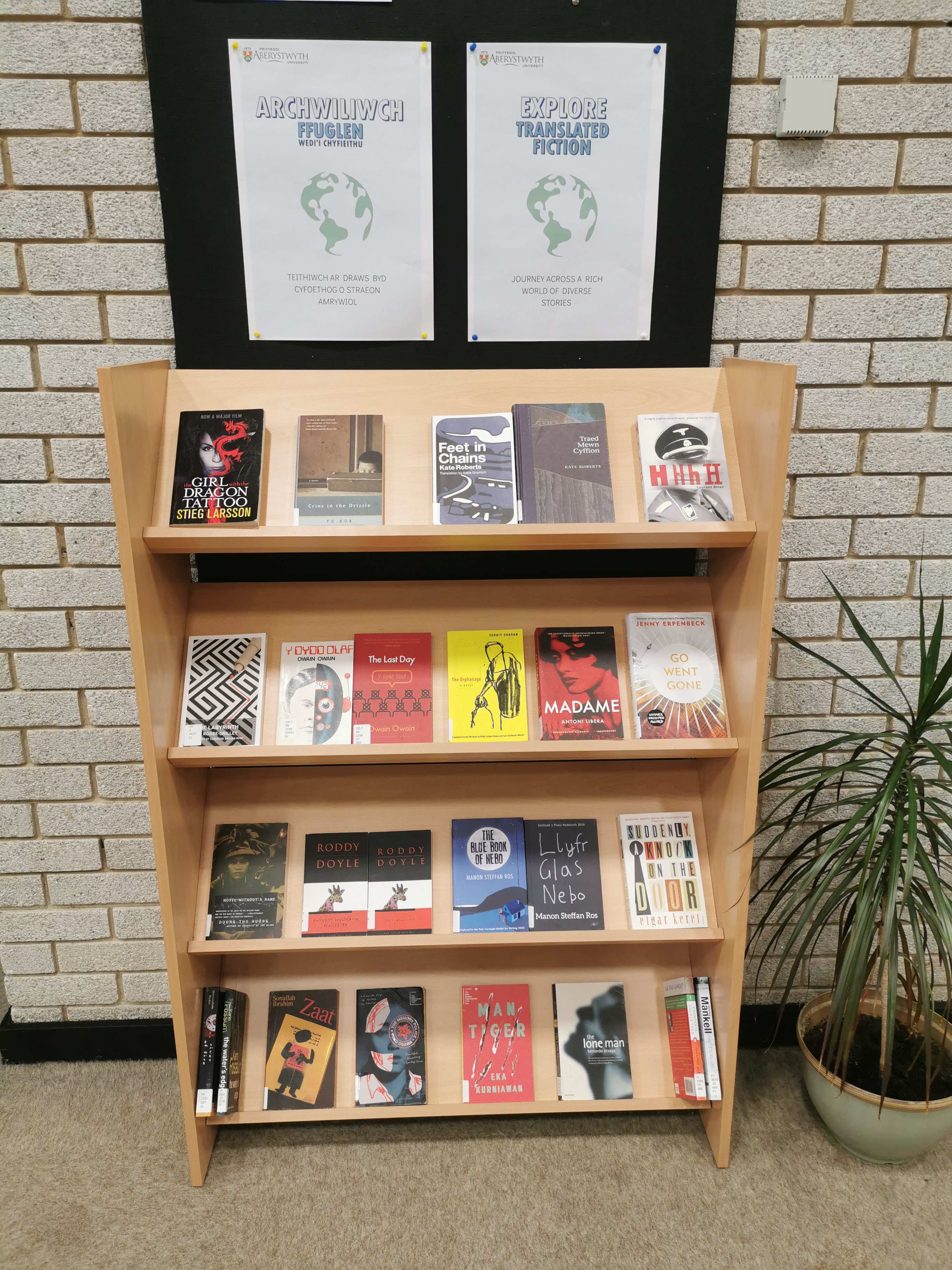
Pop in to the Hugh Owen Library to see our literature in translation display on Level F this month.

Visit Primo, the library catalogue, to search our library collections
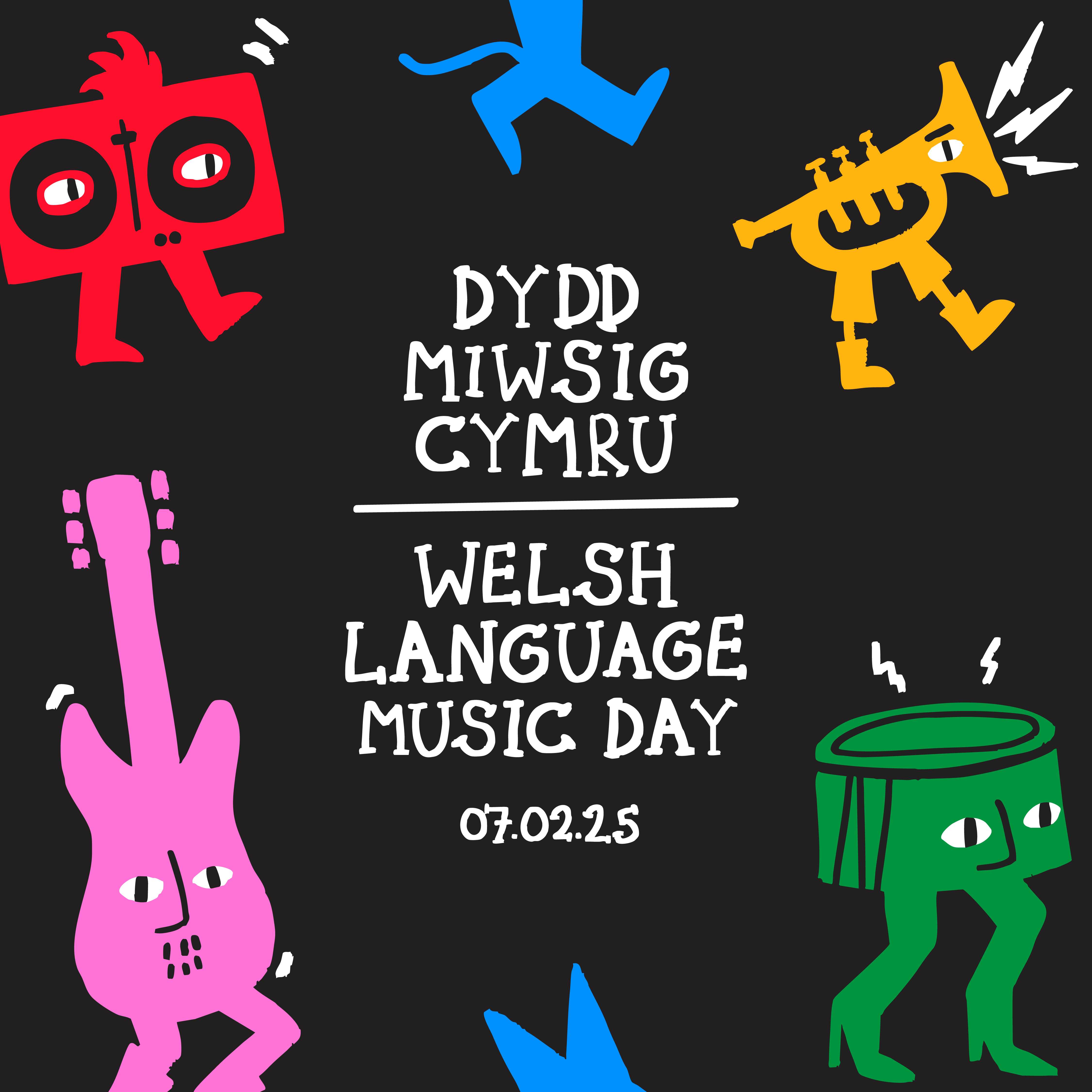
Welsh-language Music Day

Today, 7 February, is Welsh Language Music Day – a day which celebrates all forms of Welsh Language music. Whether you’re into indie, rock, punk, funk, folk, electronica, hip hop or anything else, there’s incredible music being made in the Welsh language for you to discover. Find out more about the day here with links to Spotify playlists

Our librarians have curated a Box of Broadcasts playlist of some of their favourite documentaries and performances to get you on track with music in Welsh

https://learningonscreen.ac.uk/ondemand/playlists/194552

Click on the image or link above to see the playlist

AI and the Library Week three. Prompt writing: How to write effective prompts for better AI results

AI can be a valuable tool to help you to get the most out of your time in the library. By utilising the conversational style of AI tools like ChatGPT, you can collaborate with the AI to refine searches, get personalised recommendations, and quickly discover relevant resources that meet your specific academic needs.

To get the best results from AI, it’s important to ask the right questions, and this is a skill in itself,

Pixabay

This skill, known as prompt building or prompt engineering, involves structuring your queries in a way that directly impacts the usefulness of the AI’s responses. Mastering this technique can significantly improve your results from AI tools. (For more on the importance of effective prompt building, see our AI and the Library Guide here).

What is an effective prompt?

A good AI prompt is concise, structured, and specific. You might like to think of it as a formula, where each element plays a role in making the prompt clear, targeted, and focused on the desired outcome.

The elements of the formula might look something like this:

Task + Topic + Structure + Style + Level

Let’s have a look at what we mean by those elements and how we might apply them in a library scenario.

The Task component of the formula specifies what you want the tool to do. Some examples might include: Find; Summarise; Explain; Describe; Compare.

The Topic defines the subject matter or scenario that we want the Task to explore. Examples might include: The Origins of the Second World War; Romanticism in English Literature; The Aims of Positive Psychology.

The Structure specifies the format in which the response should be presented. You could ask for responses in: One Sentence; 200 words; A Bullet Point List; A table; A Graphic or Chart.

The Style specifies how the content should be written. Styles might include: Formal; Informal; Academic; Witty.

The Level of detail indicates the depth and scope of the information needed. This level of detail could be a Basic Overview or an In-Depth Analysis (or anywhere inbetween!)

Here’s an example that you might use in the library. You want to find some library resources that will help you to answer the following question: “Analyse the themes and characteristics of English Romanticism in the poetry of William Wordsworth and Samuel Taylor Coleridge.”

  • Task: Find
  • Topic: Books that discuss English Romanticism and the poetry of William Wordsworth and Samuel Taylor Coleridge
  • Structure. A bullet point list
  • Style. Academic
  • Level. An introductory overview

The full prompt may look something like this:

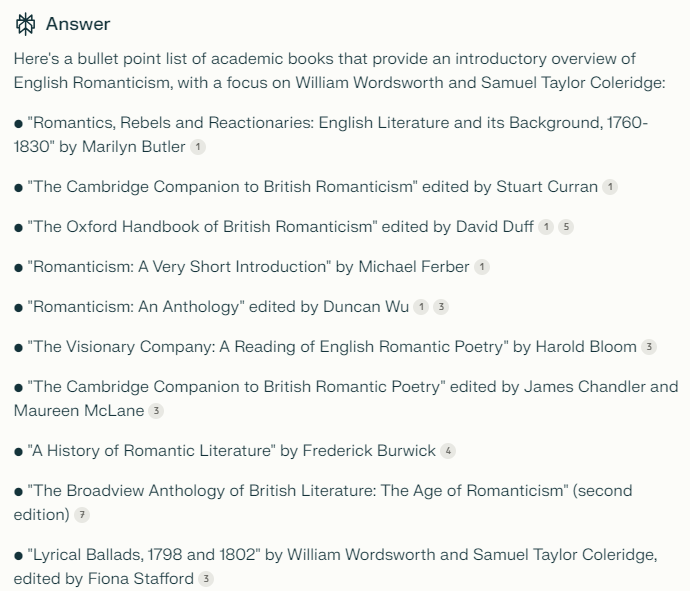
Please find me some academic books that give an introductory overview of English Romanticism and the poetry of William Wordsworth and Samuel Taylor Coleridge and show them in a bullet point list

This was the output that the AI provided* (for this example, we used perplexity.ai, a tool we will be reviewing in our next AI blog post):

*We always recommend checking any AI outputs for accuracy.

By getting to grips with the art of prompt building, you can more effectively communicate your needs to the AI. This ensures that the responses are both academically relevant and that they meet your specific learning needs – saving you time spent searching. You could then visit Primo, the library catalogue to see if the library has the suggested titles available for you.

As demonstrated in our example, a well-structured prompt can help you uncover valuable academic resources that can quickly help you get a better understanding of topics.

Shwmae Su’mae Day

15 October 2024

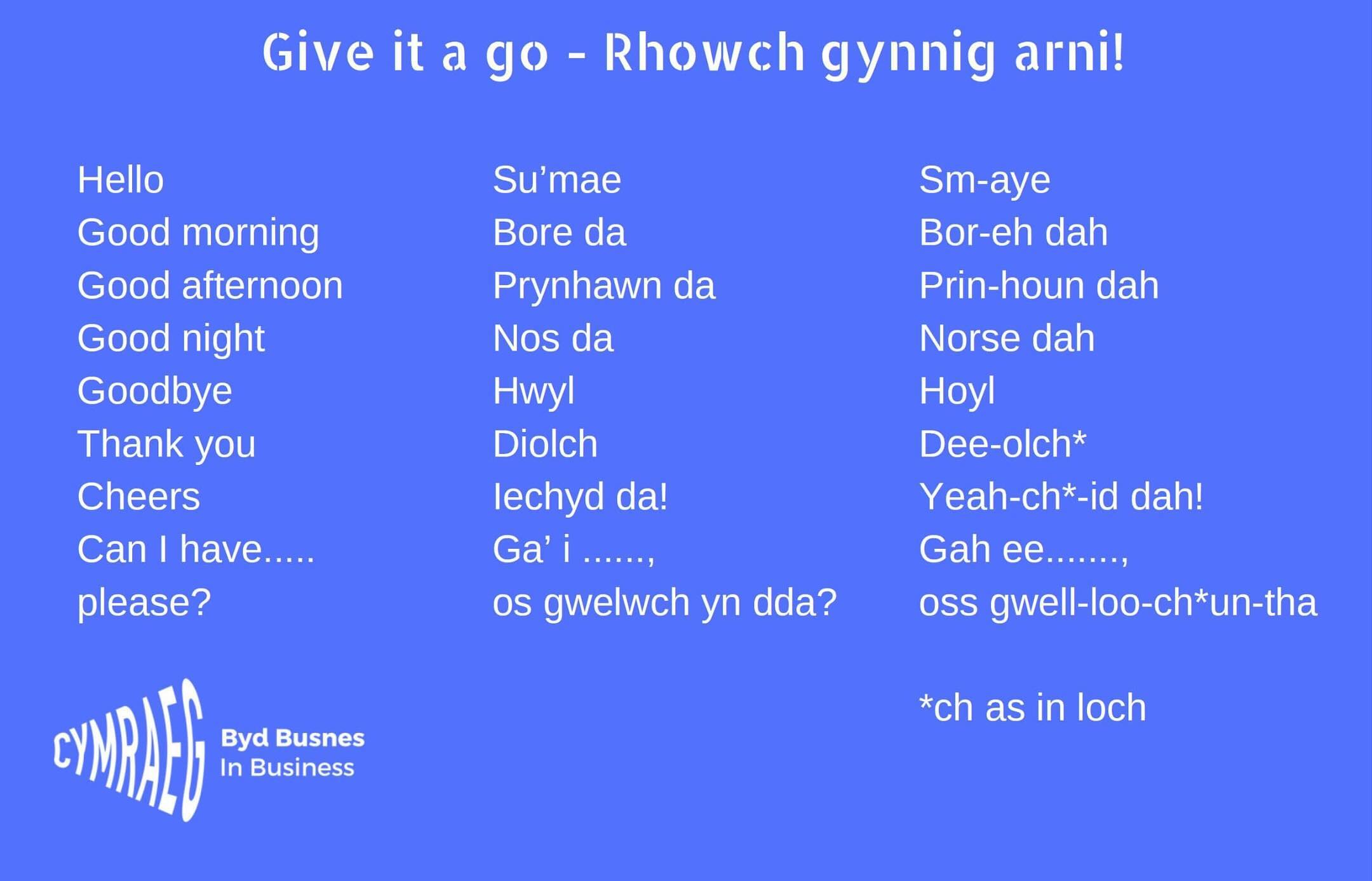
Today is Shwmae Su’mae Day, a day to celebrate and promote the Welsh language.

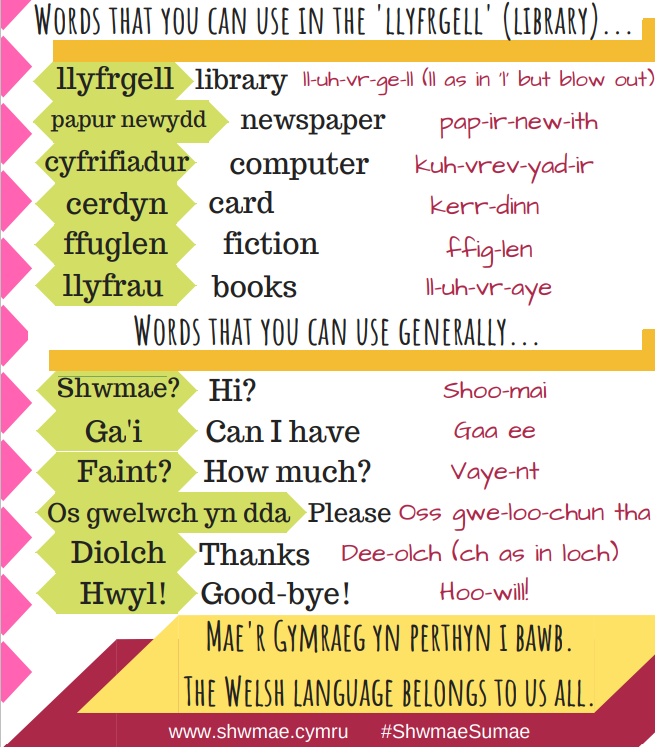
You’ll have plenty of opportunities during your time at Aber to learn and to use Welsh, so here’s a quick peek at some of the ways to make the most of it!

Learning Welsh

You’ll find details of Welsh courses at Aberystwyth University on the University website. For more information on Welsh lessons, contact learnwelsh@aber.ac.uk or visit learnwelsh.cymru.

Remember you can also download apps, such as Duolingo, to practise your skills between classes.

Library Resources

If you are on your journey to learning Welsh, thinking about starting it, or you’re a Welsh speaker looking to polish your skills, the library has a wide-range of helpful resources.

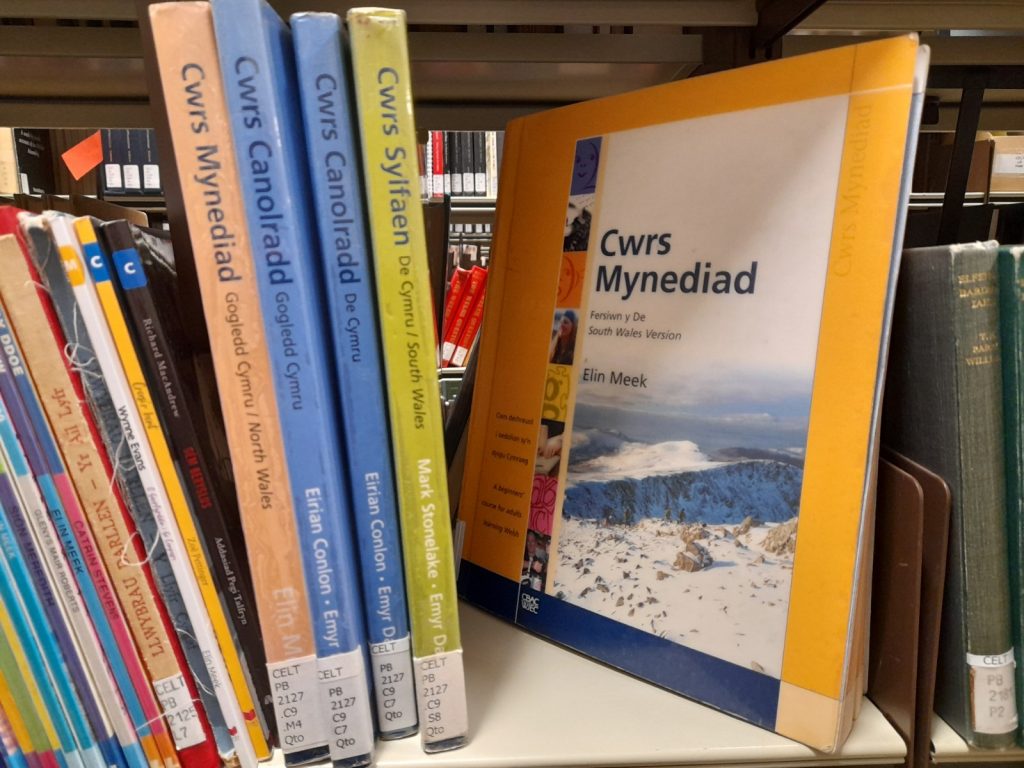
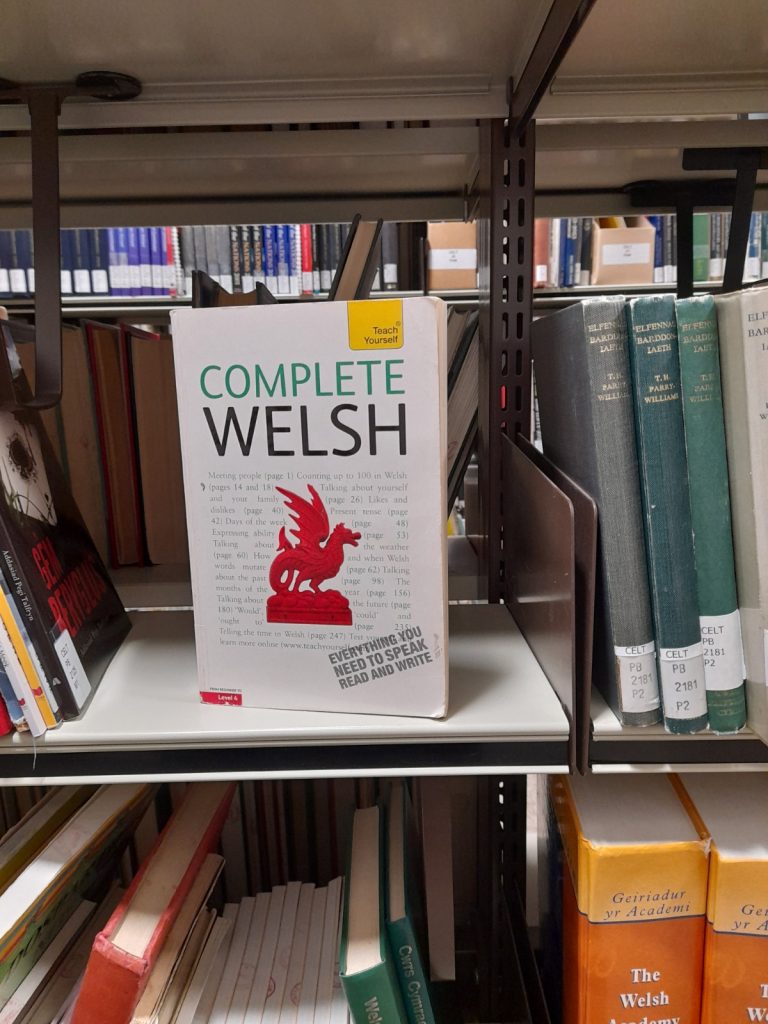
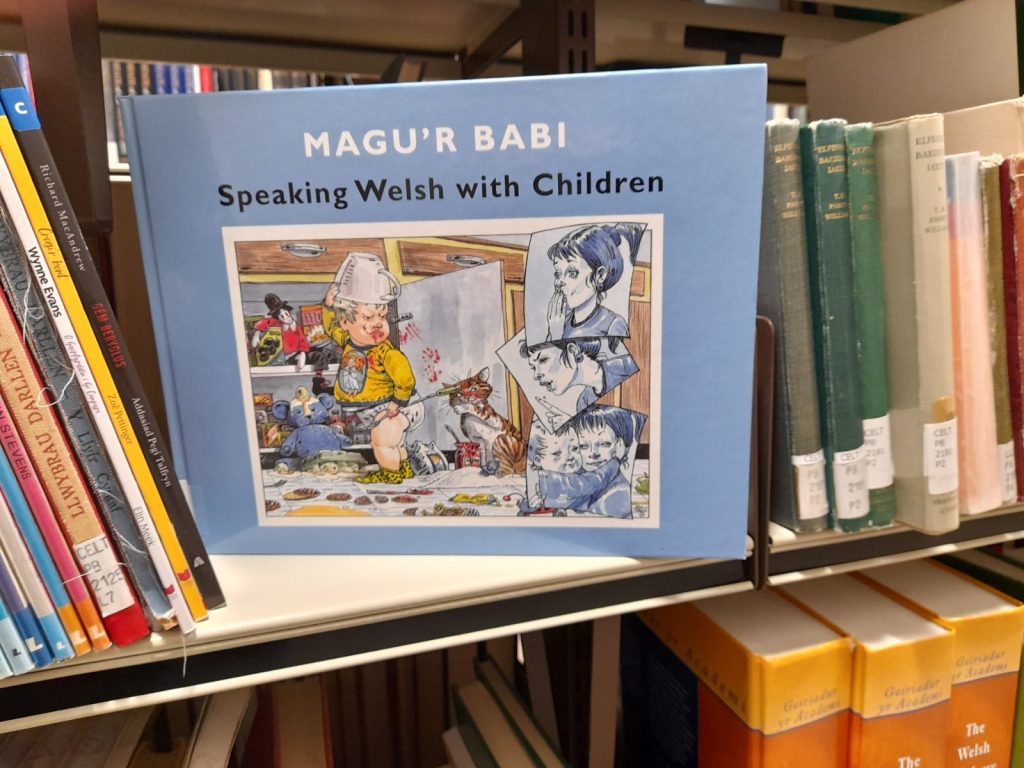
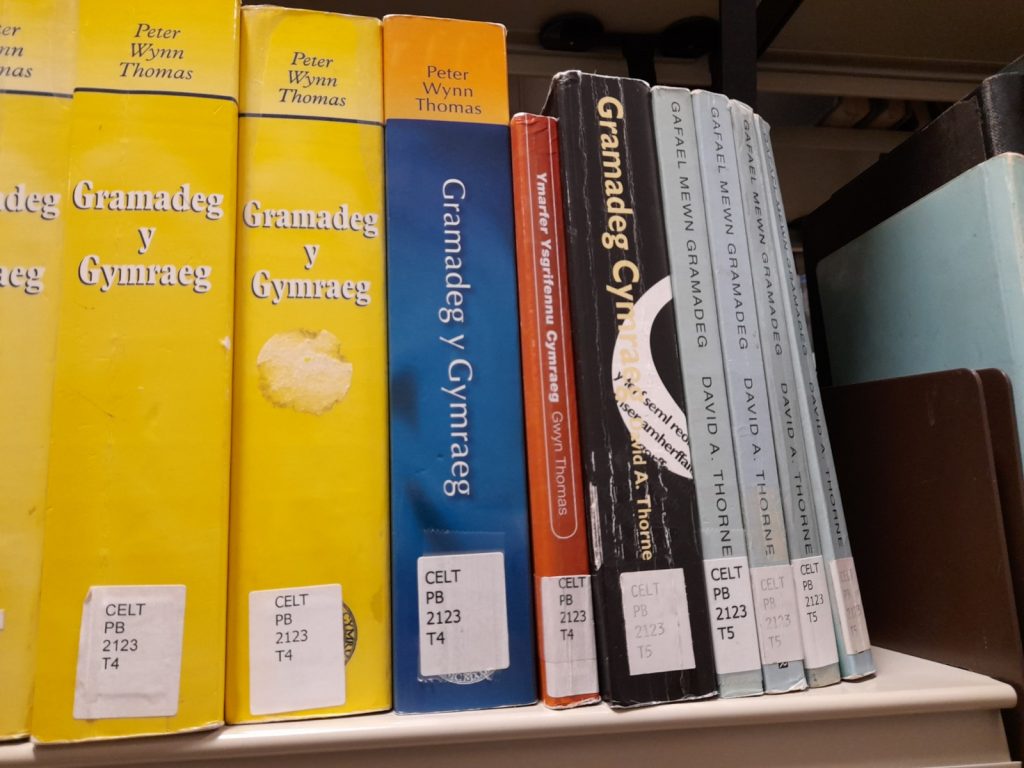
Head to the Celtic Collection on Level F of the Hugh Owen Library where you’ll find books to help you practise and develop your reading and speaking skills – from graded novels with vocabulary to grammar books to complete language courses.

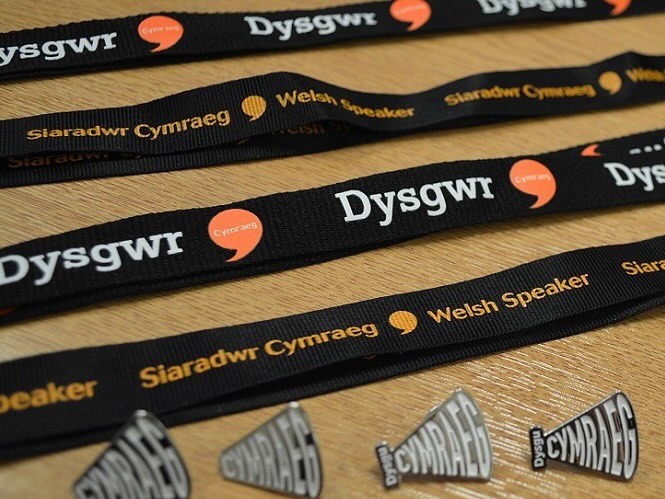
And remember to say su’mae and more to the Library staff! You can identify the ones who speak or are learning Welsh by their ‘Speak Welsh” lanyards or badges.

Studying and learning through the medium of Welsh

The wealth of AberSkills skills development resources are available in both English and Welsh. The librarians offer workshops in both languages also – workshops will be held in the language of their title on the listing page: https://www.aber.ac.uk/en/aberskills/skills-workshops/

Head over to our Digital Skills blog to find out ways to make working in Welsh on your computer more convenient: https://wordpress.aber.ac.uk/digital-capabilities/2024/03/01/work-on-your-computer-in-welsh/

And did you know? You can use most IS systems and services including Primo, LibGuides and Aspire Reading Lists in Welsh or English. Click on the language on the top right of the webpage or on the globe icon to switch between languages.

UMCA – Welsh speaking Students Union

UMCA provides a voice and community for Welsh speaking students, learners and the curious! They also host Welsh-speaking events and cultural events, and give learners the opportunity to meet and practice their Welsh with Welsh speakers. Follow UMCA on social media to learn more.